10 Best OpenRouter Alternatives in 2026
OpenRouter is one of the largest multi-model AI gateways available today, with access to more than 500 models across 80+ providers. Its current pay-as-you-go plan lists a 5.5% platform fee, while also offering routing, consolidated billing, spend controls, BYOK, and enterprise features.
But OpenRouter is not the best fit for every workload.
Teams may want an OpenRouter alternative because they need broader multimodal support, self-hosting, deeper governance, generative media APIs, different pricing economics, dedicated inference infrastructure, or tighter integration with an existing cloud stack.
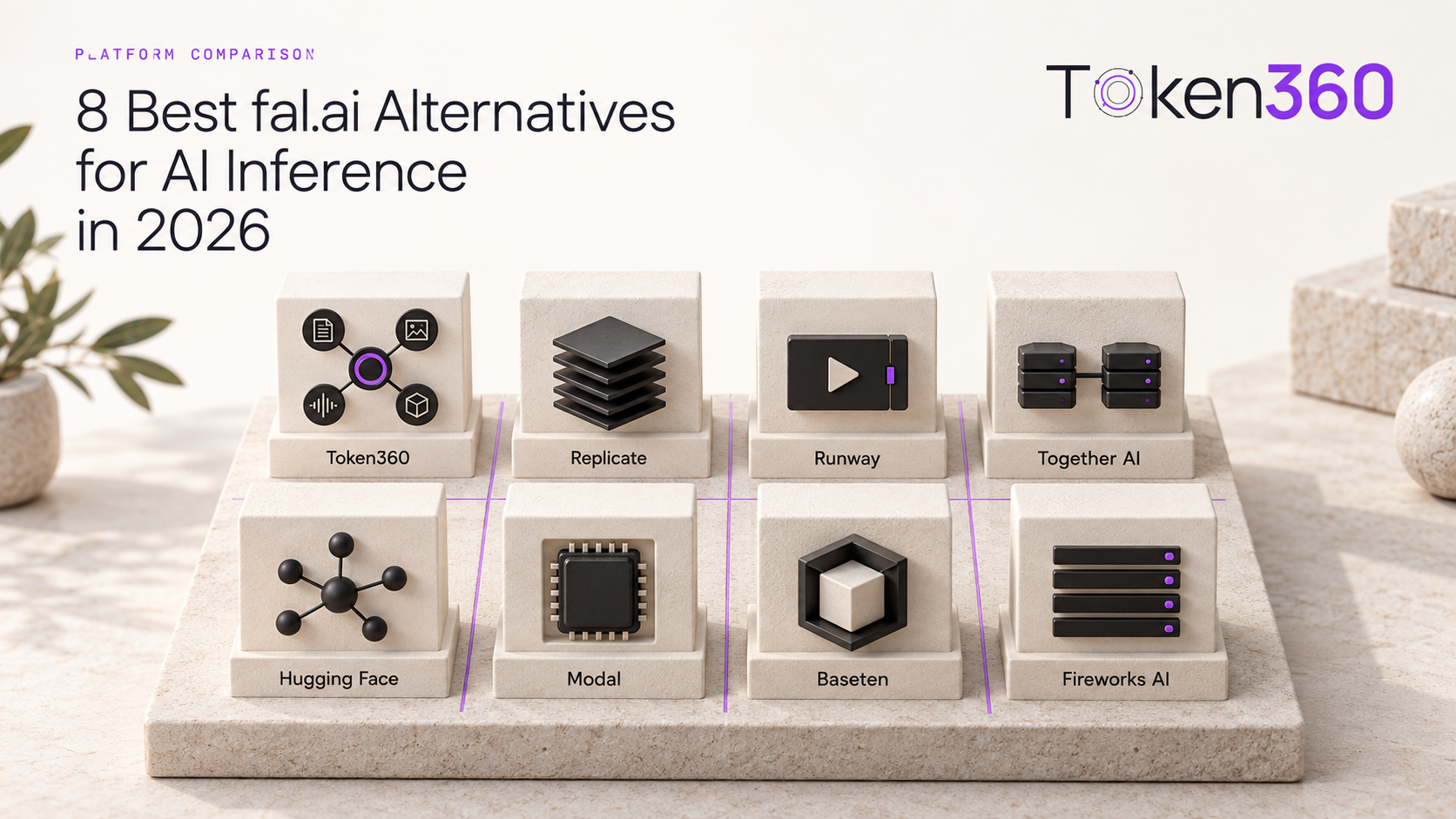
The strongest OpenRouter alternatives in 2026 include Token360, Vercel AI Gateway, Portkey/PRISMA AIRS, LiteLLM, Cloudflare AI Gateway, fal.ai, Together AI, Replicate, Hugging Face Inference Providers, and Fireworks AI.
There is no single winner for every team. The right choice depends on whether your priority is model breadth, video and image generation, routing, observability, infrastructure control, or enterprise governance.
Internal link: hyperlink “multimodal support” or “unified AI gateway” to Token360 Docs Overview.
OpenRouter Alternatives at a Glance
| Platform |
Best fit |
Public scale signal |
Main differentiator |
| Token360 |
Multimodal + enterprise AI |
80+ models |
Text, image, audio and video behind one OpenAI-compatible API |
| Vercel AI Gateway |
Vercel / app development teams |
Hundreds of models |
Zero token markup, BYOK, routing and Vercel ecosystem |
| Portkey / PRISMA AIRS |
Governance & observability |
1,600+ models stated publicly |
Gateway + guardrails + observability + prompt management |
| LiteLLM |
Self-hosted AI gateway |
140+ provider integrations |
Open-source and self-hosted |
| Cloudflare AI Gateway |
Cloudflare-native infrastructure |
Multi-provider |
Gateway, caching, analytics, rate limits and dynamic routing |
| fal.ai |
Image/video/audio generation |
Large media-model catalog |
Generative media infrastructure and async inference |
| Together AI |
Open and multimodal model inference |
100+ models |
Serverless + dedicated inference + model training |
| Replicate |
Model experimentation & custom deployment |
100+ official models + thousands of public models |
Huge model ecosystem and custom deployment |
| Hugging Face |
Open-source AI ecosystem |
200+ routed models |
Provider routing integrated with the Hugging Face ecosystem |
| Fireworks AI |
High-performance open-model inference |
100+ models |
Serverless, dedicated inference and training |
Important: vendor model counts are not directly comparable. Some count models, some providers, some model versions, and some community-hosted models. Use the numbers above as scale indicators rather than a benchmark.
Why Look for an OpenRouter Alternative?
OpenRouter already solves a meaningful problem: instead of maintaining separate integrations with every model provider, developers can access hundreds of models through a standardized API. Its current public pricing page lists 500+ models and 80+ providers on paid plans, along with auto-routing, budgets, prompt caching and management APIs.
So switching simply because another platform also offers “many models through one API” is rarely enough.
An alternative becomes more compelling when your requirements are more specific. A production team might need image, video and audio generation in addition to language models. A regulated organization might prioritize tenant-level governance and procurement. An infrastructure team might prefer a gateway that can run entirely inside its own environment. A media company may care more about asynchronous video-generation workflows than LLM routing.
That is why this comparison evaluates more than model count.
How We Evaluated These OpenRouter Alternatives
We compared the platforms across six practical criteria: model access, modality coverage, API compatibility, routing and reliability, operational controls, and deployment or commercial flexibility.
We also separated two categories that are frequently mixed together in “OpenRouter competitors” lists.
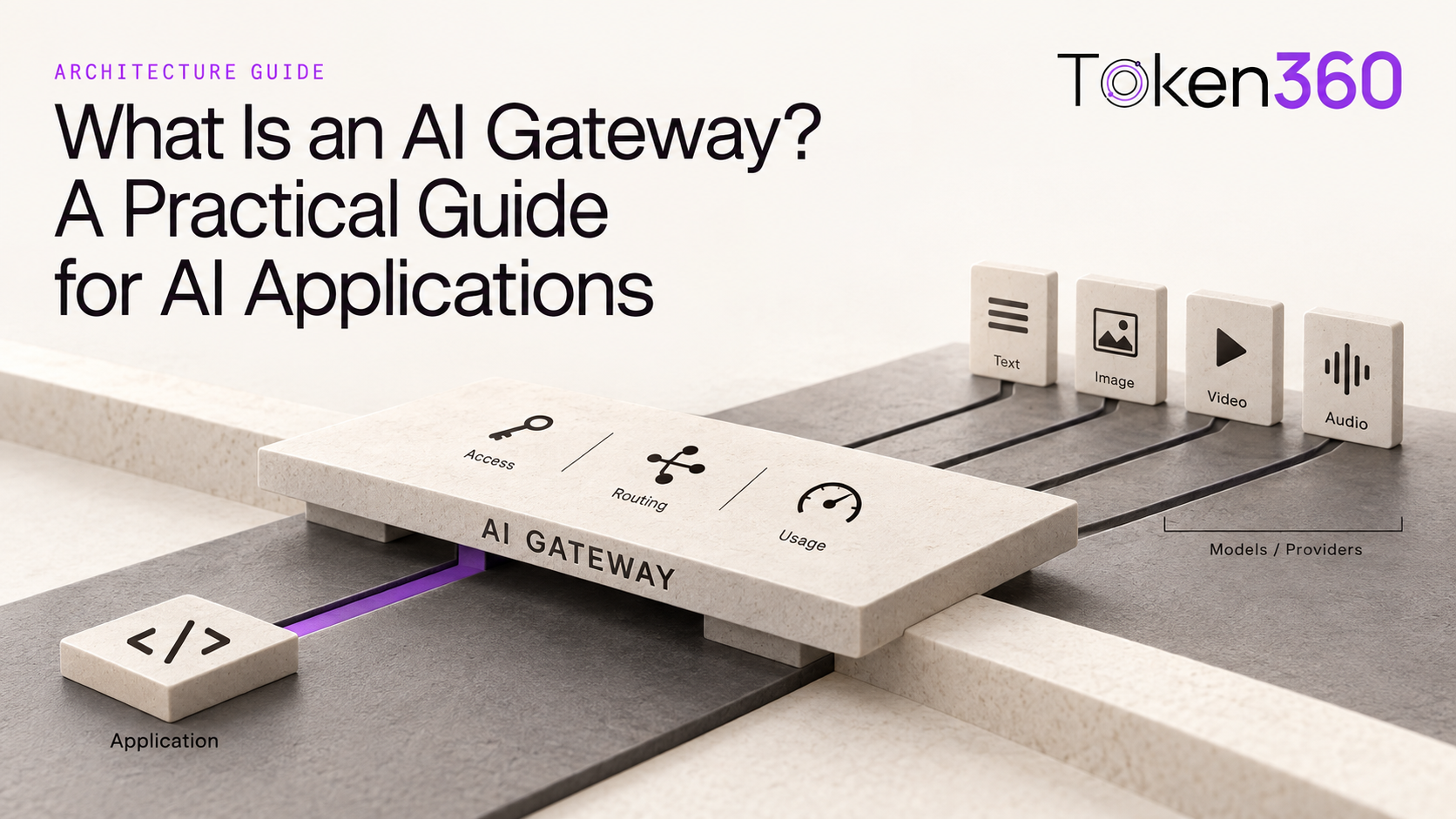
Some products are primarily AI gateways: they sit between your application and multiple model providers and focus on routing, authentication, governance or observability.
Others are primarily inference platforms: they actually host or serve models and may provide serverless inference, dedicated deployments, fine-tuning or GPU infrastructure.
Several platforms now do both.
Disclosure: This article is published by Token360, and Token360 is included in the comparison. Competitor capabilities and pricing statements are based on their publicly available documentation and pricing pages as of September 10, 2026. Because AI pricing and model catalogs change frequently, verify current terms with each provider before making a production decision.
Token360 — Best for Multimodal AI and Enterprise Model Access
Best for: teams that want language, image, video and audio models behind one API, particularly when multimodal inference and enterprise operations need to live in the same platform.
Token360 is a unified AI gateway built around an OpenAI-compatible API. Its current production catalog includes 80+ models spanning language, vision-language, image generation, video generation, speech-to-text and text-to-speech. Current models include Claude, GPT, Gemini, Seedance, Seedream, Wan, MiniMax and other model families.
A developer can keep an OpenAI-compatible client and switch the base URL to Token360. Chat, image, video and speech workloads are available through the same gateway, while Token360 handles authentication, provider routing, metering and billing. It also supports synchronous, asynchronous and batch workflows.
For enterprise teams, Token360 currently provides sub-accounts, unified wallet billing and tenant-wide API-key auditing. Custom enterprise pricing and dedicated account management are also offered. Some additional infrastructure features shown on the enterprise page are explicitly marked as “Coming Soon,” so they should not be treated as current capabilities.
Where Token360 stands out: multimodal production workloads. If your application needs to move between an LLM, an image model and models such as Seedance for video generation, keeping those modalities under one API can reduce the number of separate integrations and commercial relationships your team maintains.
Potential limitation: Token360's current public catalog is smaller than OpenRouter's 500+ model catalog, so teams whose primary requirement is the largest possible number of LLM/provider combinations may prefer another gateway.
Internal links in this section
“unified AI gateway” → Token360 Docs Overview
“80+ models” → Token360 Models
“OpenAI-compatible API” → Token360 API Reference
“enterprise teams” → Token360 Enterprise
Vercel AI Gateway — Best for Teams Already Building on Vercel
Best for: application teams that already use Vercel, the AI SDK, or modern JavaScript/TypeScript stacks.
Vercel AI Gateway offers one API key across hundreds of models and supports text, image, video and audio workloads. It provides unified billing and observability, automatic provider fallbacks and BYOK support. Vercel states that gateway token pricing follows upstream provider list prices with no token markup.
The gateway is particularly attractive when AI infrastructure is already being built around Vercel's application stack. Existing OpenAI or Anthropic integrations can generally move to the gateway through a base-URL change, and Vercel supports both its own AI SDK and common provider-compatible interfaces.
Vercel has also added more granular budgets: as of September 2026, spend limits can be applied at team, project, API-key and user scopes.
Where it stands out: developer experience and tight integration with Vercel's broader application platform.
Potential limitation: teams that do not use the Vercel ecosystem may not receive as much benefit from that platform-level integration.
External link anchor: “Vercel AI Gateway” → official Vercel AI Gateway page.
Portkey / PRISMA AIRS AI Gateway — Best for AI Governance and Observability
Best for: organizations prioritizing gateway governance, observability, guardrails and centralized AI operations.
Portkey's AI Gateway has been repositioned as PRISMA AIRS AI Gateway. Its public materials describe access to 1,600+ models through a unified interface, alongside routing, fallback, observability, guardrails, prompt management and governance capabilities.
Portkey is more than a model aggregator. It provides configurable fallbacks, load balancing, conditional routing, caching, budget management and request-level observability. Its guardrail layer can apply checks to model inputs and outputs, making it particularly relevant for organizations building centralized AI platforms.
Its public pricing currently includes a free developer tier, a Production plan listed at \$49 per month, and custom enterprise pricing.
Where it stands out: operating and governing LLM traffic across teams.
Potential limitation: if your primary requirement is access to production video and image generation rather than LLM governance, a more media-oriented inference platform may be a closer fit.
External link anchor: “PRISMA AIRS AI Gateway” → official Portkey AI Gateway page.
这里注意品牌。不要只写 Portkey 然后完全不提 PRISMA AIRS,因为截至现在它官网已经明确在推这个新名称。这样也更有 freshness signal。
LiteLLM — Best Open-Source and Self-Hosted OpenRouter Alternative
Best for: infrastructure teams that want to run the AI gateway themselves.
LiteLLM is fundamentally different from most hosted OpenRouter alternatives because its core gateway is open-source and can be self-hosted. Its current website lists 140+ LLM provider integrations, along with virtual keys, budgets, rate limits, fallbacks, logging and observability integrations.
The open-source version is listed at \$0 and can be self-hosted without a license fee. Enterprise adds features including SSO, SCIM, audit logs, secret management, multi-region controls and support, while remaining self-hosted; air-gapped deployment is also available.
This makes LiteLLM particularly attractive when organizations want the abstraction layer but do not want inference traffic or provider keys flowing through another hosted gateway vendor.
Where it stands out: infrastructure control and self-hosting.
Potential limitation: self-hosting also means your team owns more of the deployment, maintenance and reliability burden.
External link anchor: “LiteLLM open-source AI gateway” → official LiteLLM pricing/product page.
Cloudflare AI Gateway — Best for Cloudflare-Native Infrastructure
Best for: organizations already using Cloudflare and wanting AI traffic controls close to their existing network and application infrastructure.
Cloudflare AI Gateway provides logging, analytics, caching and rate limiting, with its core gateway features currently available for free.
Its OpenAI-compatible interface currently supports multiple providers including OpenAI, Anthropic, Google, xAI, DeepSeek, Groq, Mistral and others. Cloudflare's newer Dynamic Routing system can apply conditional routing, percentage rollouts, rate limits, budget limits and fallbacks without hard-coding that logic into the application.
One implementation detail matters for anyone researching Cloudflare in 2026: its older Universal Endpoint is now deprecated for new integrations. Cloudflare recommends its newer OpenAI-compatible REST interface and Dynamic Routing depending on the use case.
Where it stands out: network-adjacent AI traffic management for existing Cloudflare users.
Potential limitation: it is more naturally an infrastructure and routing layer than a marketplace-like replacement for every aspect of OpenRouter.
External link anchor: “Cloudflare AI Gateway” → official Cloudflare AI Gateway documentation.
fal.ai — Best for Generative Image, Video and Audio Workloads
Best for: applications where generative media is more important than broad LLM aggregation.
fal.ai is strongly oriented toward generative media and GPU inference. Its model APIs cover image, video and audio workflows, including long-running generation jobs that can use queued requests and webhooks rather than blocking a client connection.
Pricing varies by workload. fal's public pricing page shows video models billed by output units such as seconds or videos, while custom compute can be priced by GPU time.
That makes fal.ai a different type of OpenRouter alternative. It is less about being a universal LLM routing layer and more about giving developers production access to media-generation models and infrastructure.
Where it stands out: image and video model infrastructure.
Potential limitation: teams primarily looking for enterprise-wide LLM routing and governance may want a gateway-first platform instead.
External link anchor: “fal.ai model API pricing” → official fal.ai Pricing page.
Together AI — Best for Open and Multimodal Model Infrastructure
Best for: teams that want serverless inference now but may later need dedicated inference, model customization or GPU infrastructure.
Together AI currently documents 100+ models across text, image, video and audio. It provides serverless inference as well as provisioned throughput, dedicated model inference and dedicated container inference.
A large portion of its inference interface is OpenAI-compatible, covering chat, vision, embeddings, image generation and audio operations. Video generation uses Together's own API rather than the OpenAI SDK interface.
Its public serverless pricing is model-specific, with separate pricing across chat, vision, image, audio and video workloads.
Where it stands out: the ability to move from API-based inference toward deeper infrastructure and model deployment without necessarily changing vendors.
Potential limitation: teams seeking a provider-neutral control plane across a very large number of third-party APIs may prefer a dedicated gateway.
External link anchor: “Together AI Serverless Inference” → official Together AI page.
Replicate — Best for Experimenting With and Deploying AI Models
Best for: developers who value model variety, rapid experimentation and custom model deployment.
Replicate lets developers run public AI models through cloud APIs without managing the underlying infrastructure. Its ecosystem contains thousands of community-contributed open-source models, while Replicate itself maintains more than 100 “official models” with stable APIs and predictable pricing.
Replicate also allows teams to package and deploy their own models using Cog. Production deployments can specify hardware and scaling characteristics.
Pricing depends on the model. Some workloads are billed according to hardware/runtime, while official models may use predictable units such as output images, video duration or tokens.
Where it stands out: breadth of experimentation and bringing custom models into the same platform.
Potential limitation: its model execution abstraction is different from a gateway designed primarily to normalize many third-party commercial APIs.
External link anchor: “Replicate pricing” → official Replicate Pricing page.
Hugging Face Inference Providers — Best for the Open-Source AI Ecosystem
Best for: teams already using Hugging Face models, libraries and workflows.
Hugging Face Inference Providers currently offers routed access to 200+ models from external inference providers through Hugging Face tooling. Users can either let Hugging Face route and bill requests or bring a custom provider key.
For routed requests, Hugging Face states that it passes through provider pricing without an additional markup. Free, Pro, Team and Enterprise accounts also receive different levels of monthly inference credits.
The main attraction is ecosystem integration: developers can move from discovering models on the Hugging Face Hub to inference using familiar Hugging Face SDKs and authentication.
Where it stands out: open-source model discovery and experimentation.
Potential limitation: it is not primarily designed as an enterprise AI gateway with the same depth of routing, governance and traffic-control features as gateway-first products.
External link anchor: “Hugging Face Inference Providers” → official Inference Providers pricing documentation.
Fireworks AI — Best for High-Performance Open-Model Inference
Best for: teams focused on high-performance inference and training for open models.
Fireworks AI provides OpenAI-compatible serverless inference for open models, with its documentation currently pointing to a catalog of 100+ available models.
Its serverless product offers Standard, Priority and Fast serving paths. Fireworks also supports dedicated deployments and model training, allowing teams to move beyond shared serverless inference when they require greater infrastructure control.
Serverless inference is generally billed by usage, while dedicated deployments use GPU-based pricing.
Where it stands out: open-model serving, performance optimization and a path from serverless inference to dedicated deployment and training.
Potential limitation: teams looking primarily for a broad commercial-model aggregation gateway rather than an inference platform may find OpenRouter-style gateways more aligned with that requirement.
External link anchor: “Fireworks AI Serverless Inference” → official Fireworks documentation.
Which OpenRouter Alternative Should You Choose?
There is no universally best OpenRouter alternative.
If you need multimodal model access across language, image, video and audio, Token360 and Vercel AI Gateway are two broad options worth evaluating. Token360 is especially oriented toward multimodal inference plus enterprise account and billing management, while Vercel is particularly attractive for teams already operating in its developer ecosystem.
If self-hosting and infrastructure control are the priority, LiteLLM is one of the clearest choices because its open-source gateway can run in your own infrastructure.
If governance, observability and guardrails dominate the decision, Portkey/PRISMA AIRS deserves consideration. If you already run heavily on Cloudflare, Cloudflare AI Gateway may reduce operational fragmentation.
For generative media, fal.ai, Replicate, Together AI and Token360 each take different approaches. fal.ai emphasizes media inference infrastructure; Replicate emphasizes a broad model ecosystem and custom deployments; Together combines multimodal inference with deeper AI infrastructure; and Token360 brings language, image, video and audio models into one OpenAI-compatible gateway.
The practical question is therefore not:
“Which platform has the most models?”
It is:
“Which platform gives our production workload the right models, reliability, controls, economics and operational model?”
Is Token360 a Good OpenRouter Alternative?
Yes—particularly for teams whose AI workloads extend beyond text.
Token360 provides an OpenAI-compatible API across language, image, video and audio models. Its current production catalog contains 80+ models, and the platform handles provider routing, usage metering and billing behind one API.
It is therefore most relevant when the goal is not simply to switch between LLMs, but to operate multiple AI modalities through a common API and enterprise relationship.
Teams whose sole priority is the largest possible selection of provider/model combinations should also evaluate OpenRouter, Vercel, Portkey or a self-hosted gateway such as LiteLLM.
Internal CTA link anchor: “Explore the Token360 model catalog” → Models page.
Frequently Asked Questions About OpenRouter Alternatives
What is the best OpenRouter alternative?
The best alternative depends on the workload. Token360 is a strong fit for multimodal enterprise inference; Vercel AI Gateway fits Vercel-centric development teams; Portkey/PRISMA AIRS emphasizes governance and observability; LiteLLM is well suited to self-hosting; and fal.ai is particularly relevant for generative media.
Is there a free OpenRouter alternative?
LiteLLM's open-source gateway can be self-hosted without a license fee. Cloudflare also currently offers its core AI Gateway features for free, although underlying provider inference costs still apply. Vercel AI Gateway does not add a token markup, but users still pay for model usage.
Which OpenRouter alternative supports video generation?
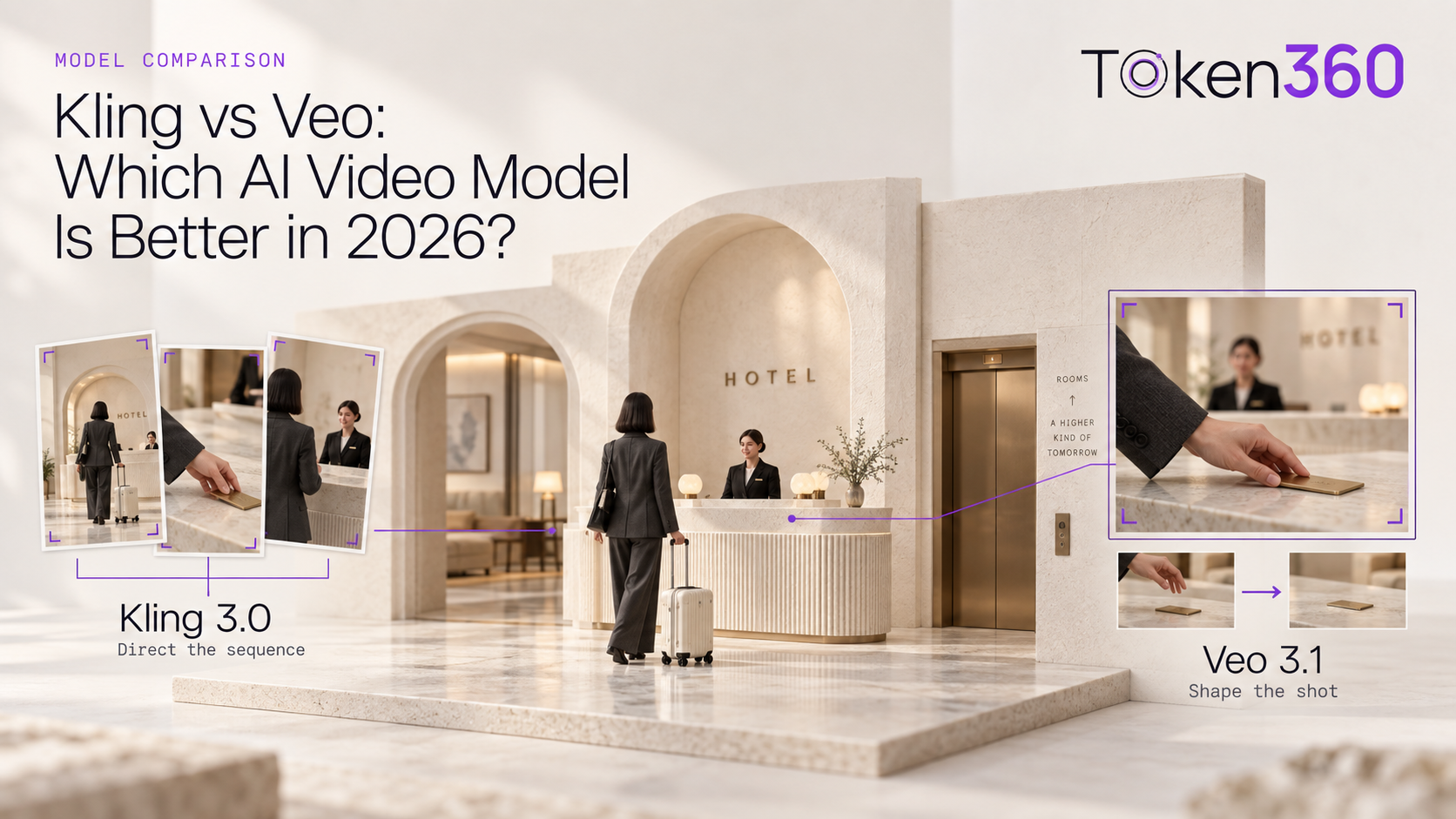
Token360 supports video generation as a first-class API modality and currently lists models including Seedance, Wan, MiniMax and Veo families. Together AI, fal.ai, Replicate and Vercel also provide access to video-generation workloads in different forms.
Which OpenRouter alternative can be self-hosted?
LiteLLM is the clearest option in this comparison for teams that specifically want to self-host the gateway. Its open-source gateway is free to self-host, while its Enterprise product adds security, governance and support features.
Is OpenRouter still a good choice in 2026?
Yes. OpenRouter remains a strong option for broad model and provider access. Its current paid offering lists 500+ models and 80+ providers, along with routing, unified billing and enterprise controls. The reason to consider an alternative is not that OpenRouter lacks value, but that another platform may better match a specific requirement such as multimodal inference, self-hosting, media generation or infrastructure governance.
Ready to Compare Models in One API?
Instead of maintaining separate integrations across language, image, video and audio providers, Token360 gives developers access to 80+ production models through one OpenAI-compatible API.
Explore the Token360 model catalog →
这个 CTA 链到 Models


 Tutorial
 Comparison
 Comparison