One Headphone UGC Prompt, Three Seeds: Brief vs. Output
Three headphone-ad outputs missed exact pairing text; two duplicated the product. A prompt review with real frames and clear evidence limits.
MODEL TESTS · FAILURE CASE STUDY
By Token360 · Evidence reviewed November 5, 2026
First-party test records, original generation files and sampled-frame review. This is a case study of one brief, not an independent model benchmark.
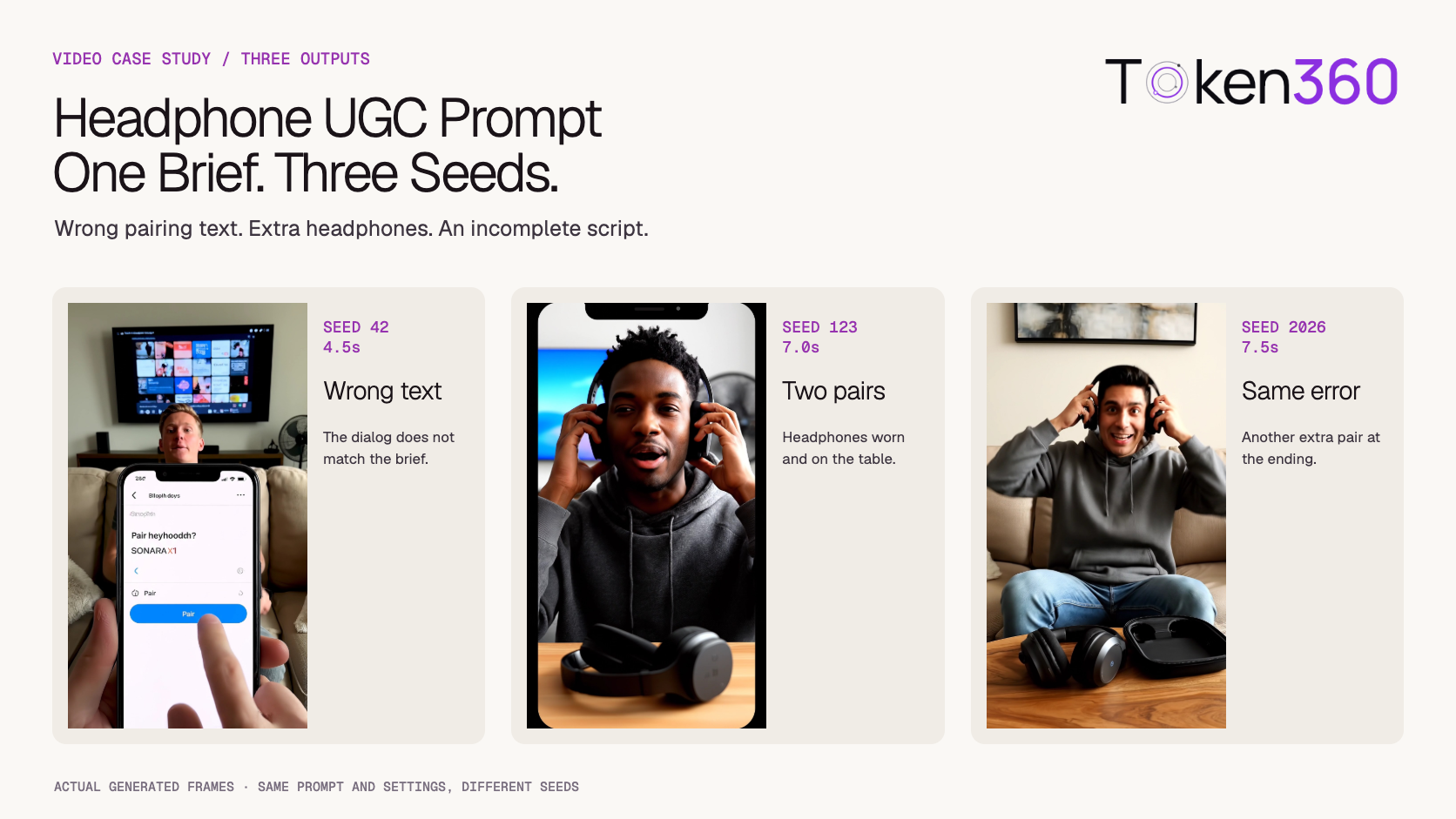
We tested the same headphone-ad prompt with three seeds through the Token360 API. All three outputs missed the exact pairing-dialog text, and two showed an extra pair of headphones. The videos looked like product ads, but none established complete, accurate execution of the seven-part brief.
That distinction determines the verdict. Opening a box, holding headphones and showing a phone can make the story recognizable without proving that a zipper opened, the controls were used correctly or the promised product ending happened. This prompt is not supported by the test as a copy-and-generate recipe for a finished advertisement.
What was the eight-second headphone ad supposed to show?
The goal was one complete eight-second UGC-style ad, with all cuts generated by the video model. The script required seven ordered segments spanning unboxing, material checks, pairing, wearing, noise-cancelling use and a product finish. The test did not assemble individually generated clips in an external editor.
Segment
Required visual action
1 · Package
Tear the packaging tape.
2 · Reveal
Remove the carrying case, unzip it and reveal the headphones.
3 · Material checks
Peel film, touch the hinge, flex the headband and press the cushions.
4 · Connect
Power on, pair on a phone and put on the headphones.
5 · Noise cancellation
Double-tap the ear cup and react to the change in ambient sound.
6 · Listening
Lean back, close eyes, tap a knee and lift one ear cup.
7 · Product finish
Show the headphones beside an open case and a phone displaying a playlist.
The styling request combined authentic phone footage, ASMR, natural reactions, accurate hands and a consistent product design. The product name used in the script was SONARA X1. This review evaluates the generated depiction against the brief, not the performance of a physical headphone product.
The user supplied the script, continuing a previously referenced social-platform UGC prompt structure. Authorization was not confirmed. Only five dialogue lines, exact pairing text and continuity requirements such as control placement and clothing were adjusted; the actions and order were preserved. Neither the original nor the edited version is presented as Token360’s original work. Rewording alone does not establish permission, and the full prompt is not republished here.
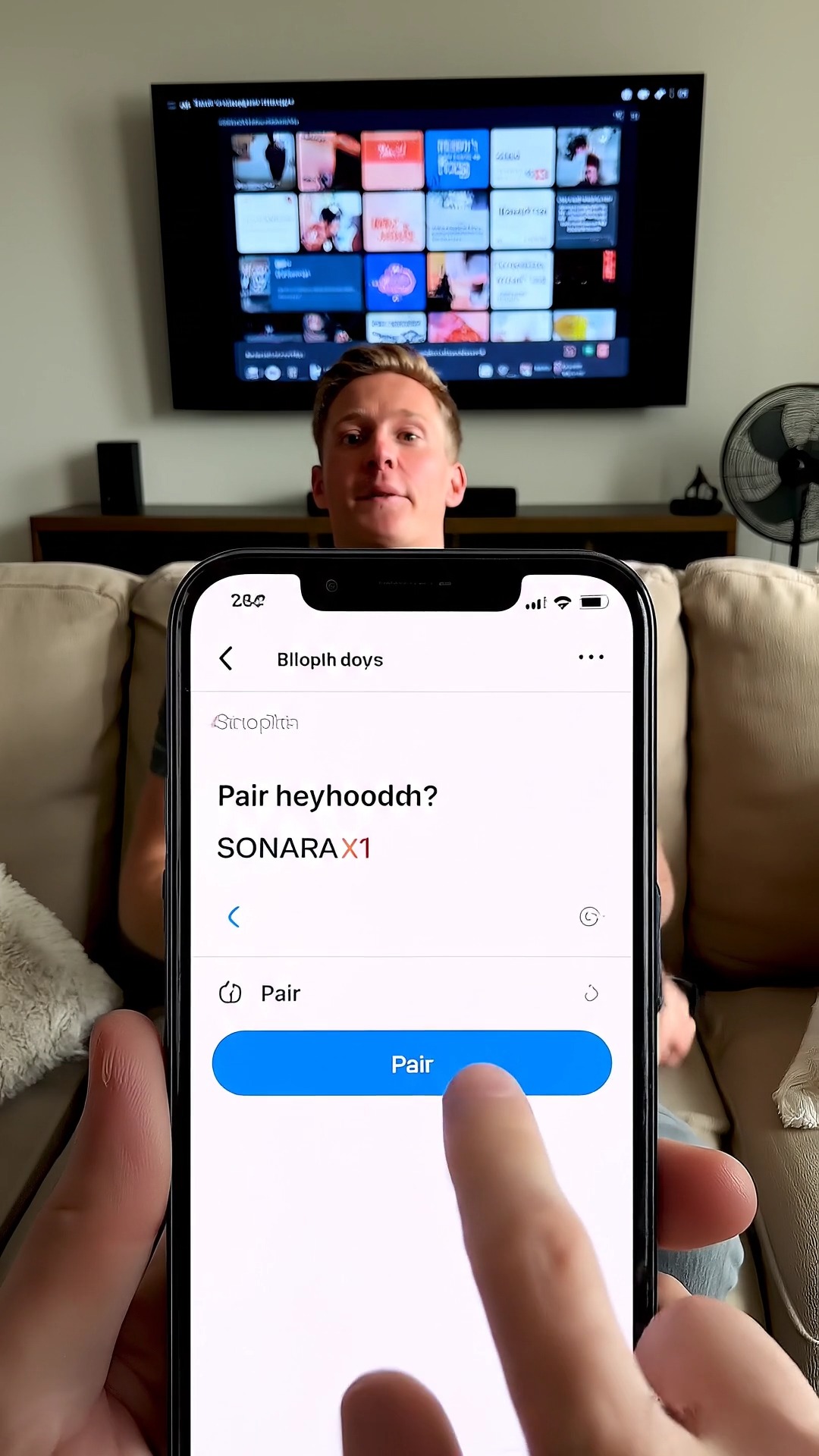
The short, exact interface target is necessary to understand the text mismatch:
Pair headphones?
SONARA X1

Cancel    Pair
Scope: this article reviews a specific prompt and the supplied outputs, not a model ranking or capability verdict. The model identity is omitted from this editorial version; the original identifier and full requests remain in local test records. Published settings are therefore a partial record, not a complete reproduction recipe.
How were the three seeds tested and checked?
All three requests used identical prompt text and the same non-seed settings. Only Seed 42, 123 or 2026 changed. We verified the supplied request records, media metadata and 16 half-second samples per file. No product reference image was supplied, and no repeated run of the same seed was reviewed.
The prompt strings in the three request files have matching SHA-256 hashes. This confirms that the comparison did not quietly introduce a different script for a later seed. It does not make three outputs a large or representative benchmark.
Seeds tested: 42, 123 and 2026. These are the recorded Token360 request fields. For integration, use the selected model’s public schema; accepted parameters differ across models. The documentation describes request handling, not the quality of these particular ads.
Metadata check
Result for each of the three files
Video-track duration
8.00 seconds
Dimensions
1080 × 1920, portrait
Video samples and average frame rate
192 samples; 24 fps
Audio track
Present; approximately 8.03 seconds of track duration
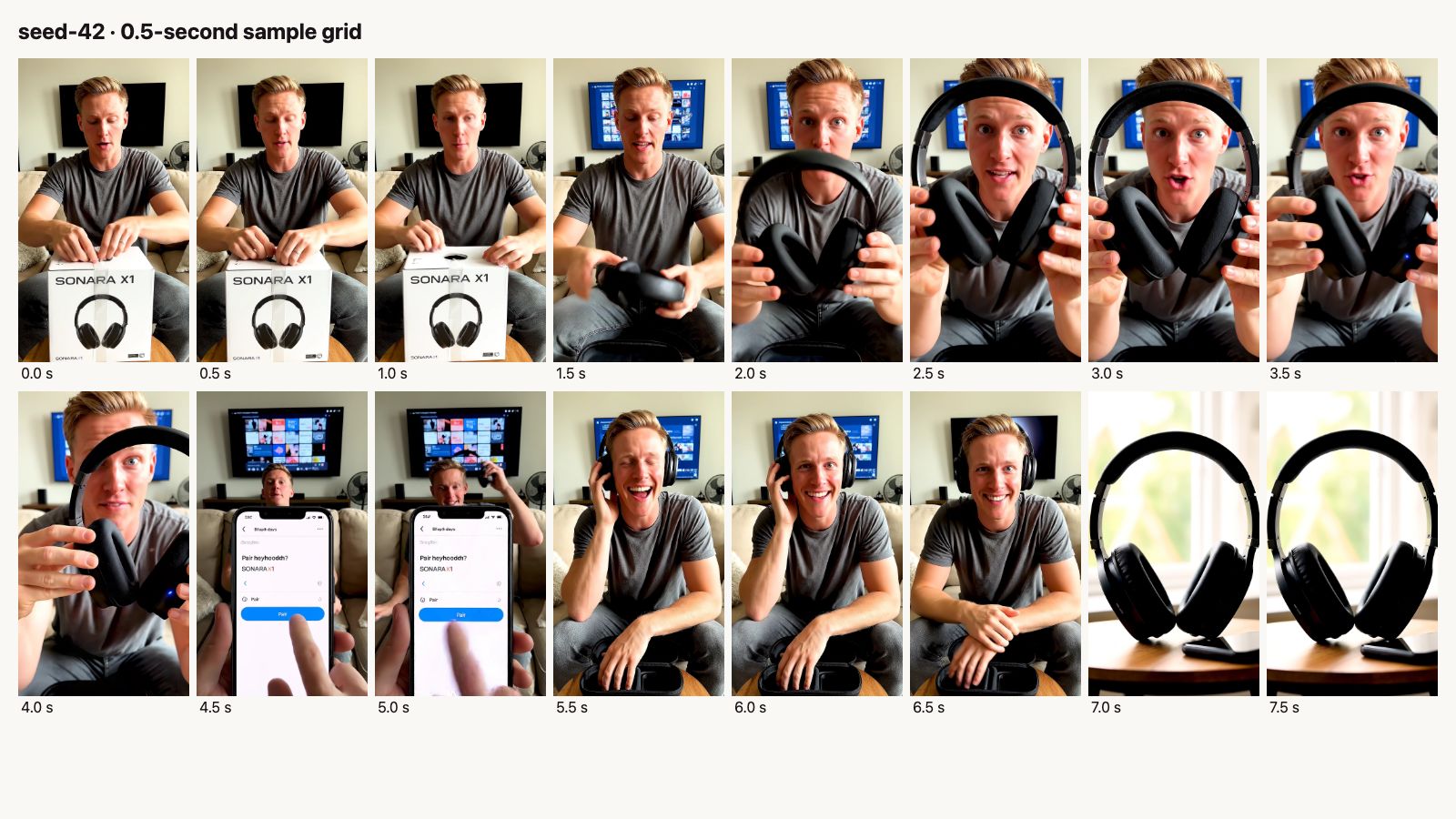
The review sampled 0.0, 0.5, 1.0 and subsequent half-second targets through 7.5 seconds: 48 images across the three files. The evidence panels reproduce those samples rather than reconstructed scenes. Full videos and chronological sheets are available with each result. Browser seeking provides sampling positions, not a claim of frame-exact cut detection.
No exhaustive continuous-action review or listening audit was completed. A hand beside an ear cup cannot establish a correctly timed double-tap. An audio track cannot establish correct dialogue, ASMR, noise-cancelling sound changes or lip synchronization. Those items remain unassessed rather than silently counted as passes or failures.
Seed 42: why was a recognizable storyline still insufficient?
Seed 42 provided the clearest broad progression from opening and presentation to pairing, wearing and a product close-up. It still failed the exact interface requirement and did not establish all required physical actions. Recognizing the intended story is a weaker standard than confirming the complete operations and specified ending.
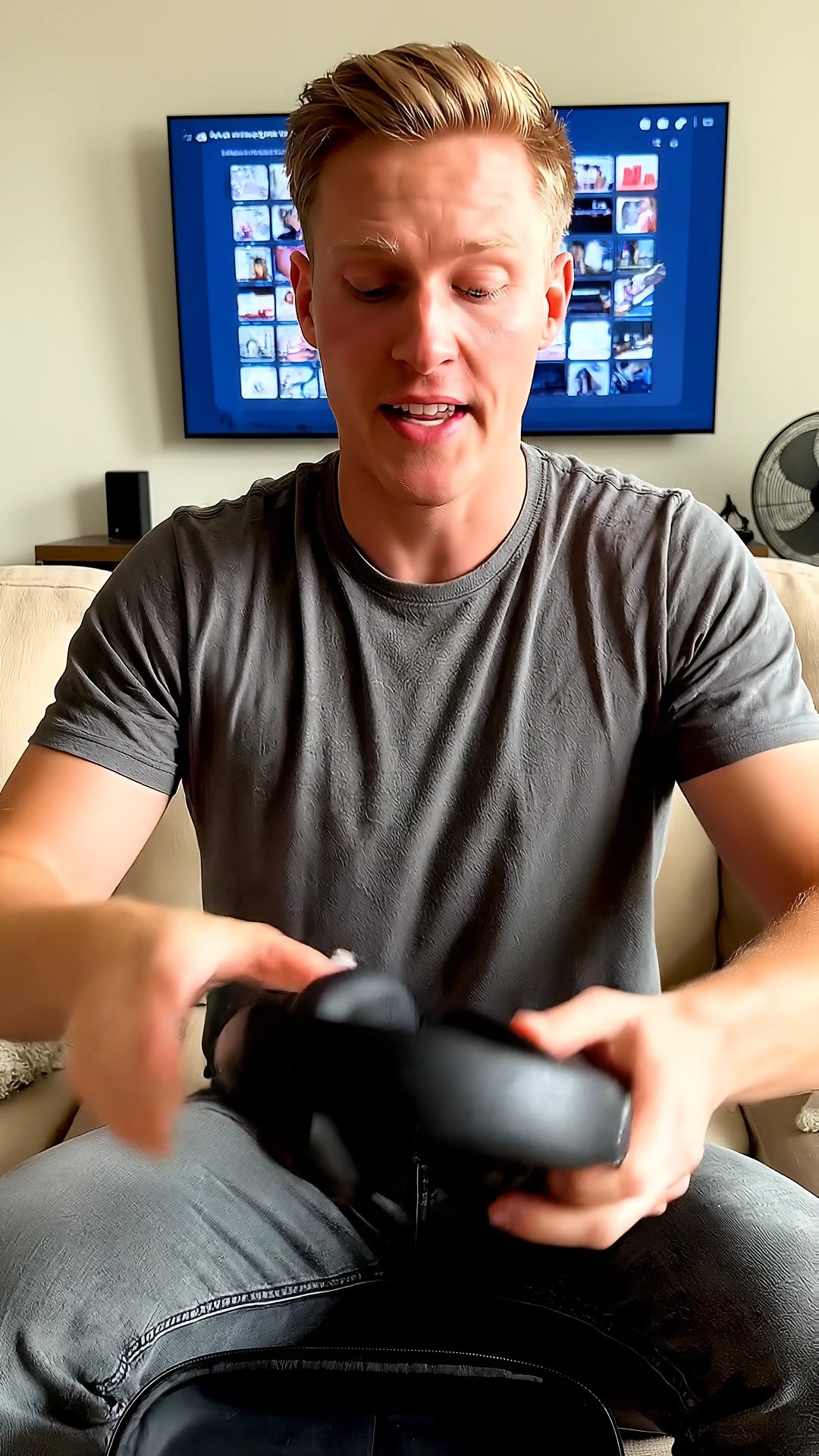
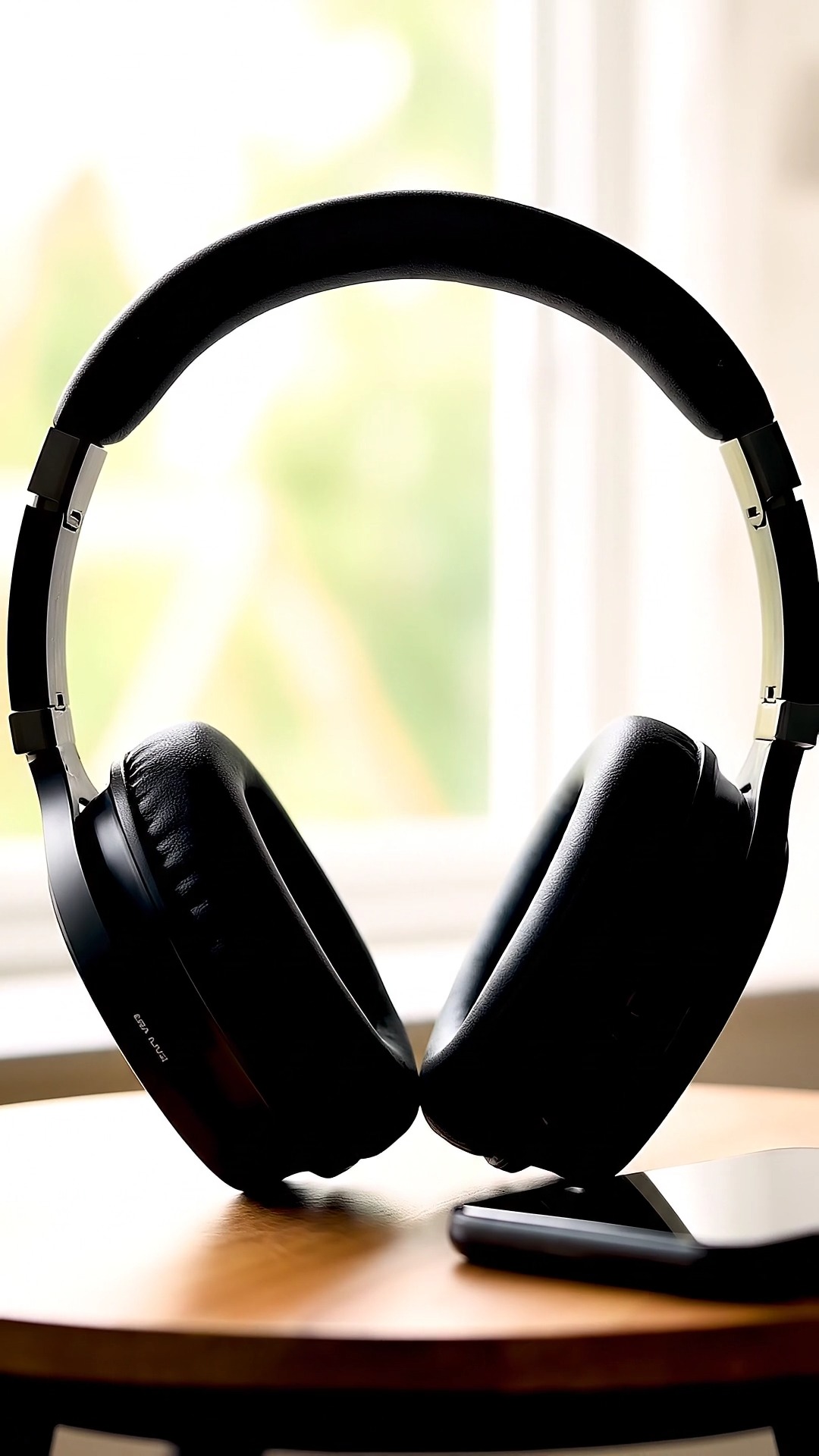
The half-second sheet shows packaging at the start, a case around 1.5 seconds, headphone presentation through roughly 4 seconds, the phone around 4.5–5 seconds, wearing at 5.5–6.5 seconds and a product view around 7–7.5 seconds. These are sampled appearances, not precise shot-duration measurements.
Seed 42 · 1.5s
Seed 42 · 4.5s
Seed 42 · 7s
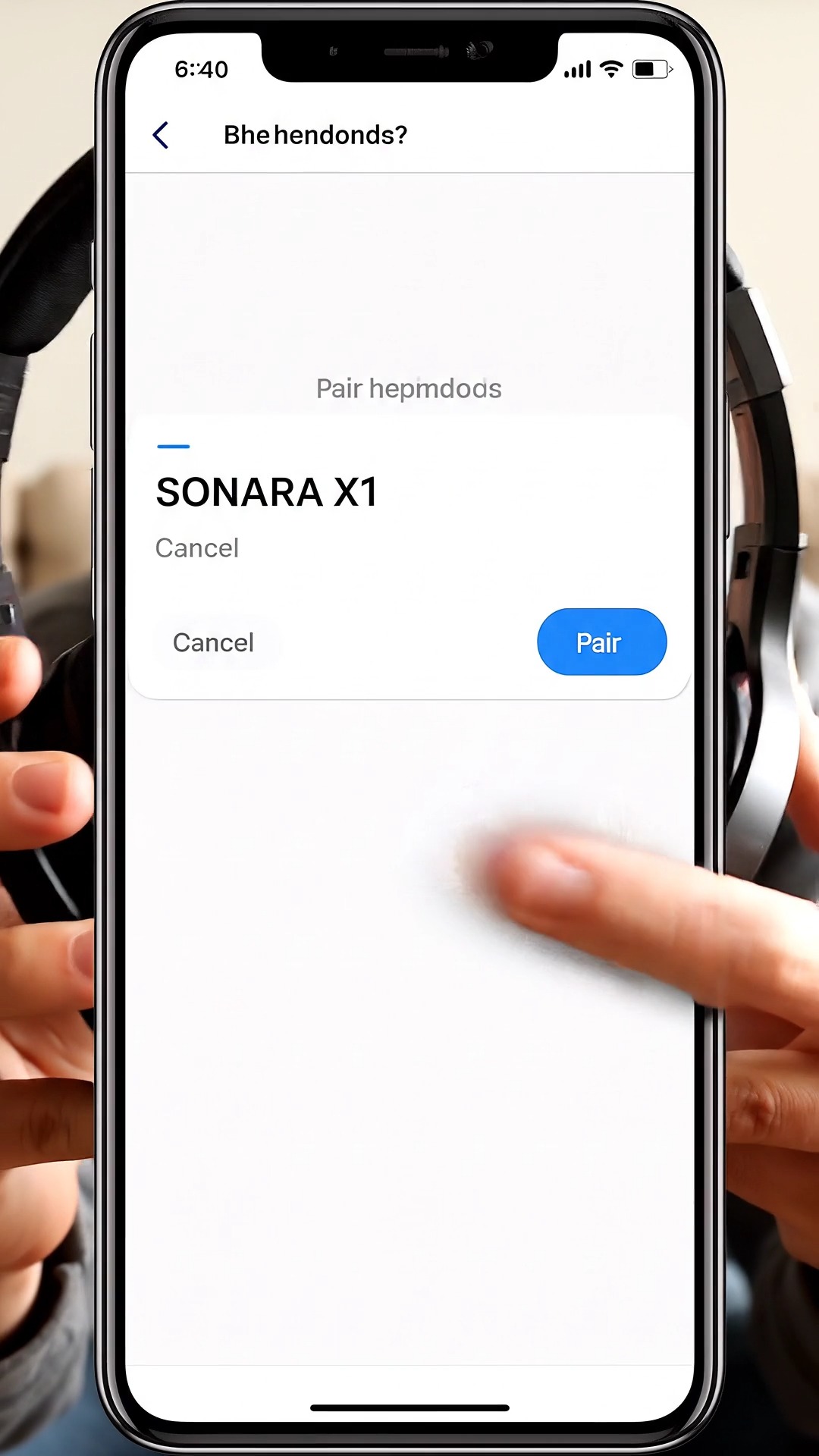
A case appears at 1.5s; the pairing interface at 4.5s contains an incorrect heading; the 7s product close-up does not establish the requested open case and playlist. Actual output samples; times identify half-second sampling targets. Click a frame to inspect the original resolution.
In the phone sample, the heading is malformed rather than the requested “Pair headphones?”. The product name and a blue Pair button are relatively readable, but those correct fragments do not make the whole interface accurate. The requirement was a complete, specific dialog, not merely some recognizable pairing vocabulary.
The sampled views do not clearly establish a complete zipper opening followed by every material check. The tester also judged the facial reactions exaggerated relative to the requested natural response. That judgment is qualitative; it is not a measured expression score.
Similarly, the later presence of headphones on the presenter does not verify the mechanics of putting them on. Whether the double-tap occurred correctly remains unresolved under this review method. At the end, a product shot appears, but the requested open carrying case and visible playlist are not fully presented. A partial ending should not be labelled a completed hero composition.
Inspect Seed 42: original video and chronological sample sheet
Seed 123: what changed, and what new errors appeared?
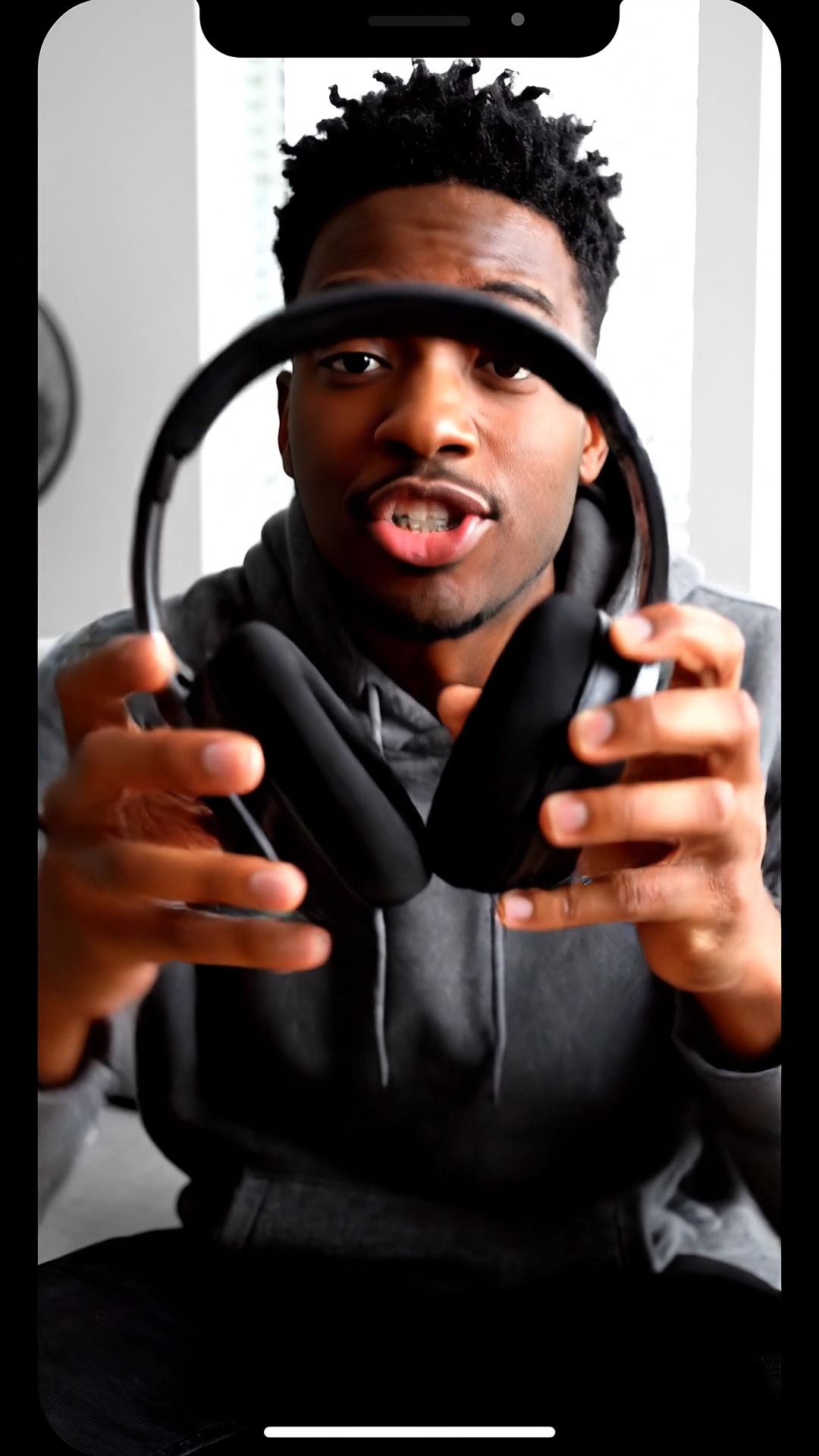
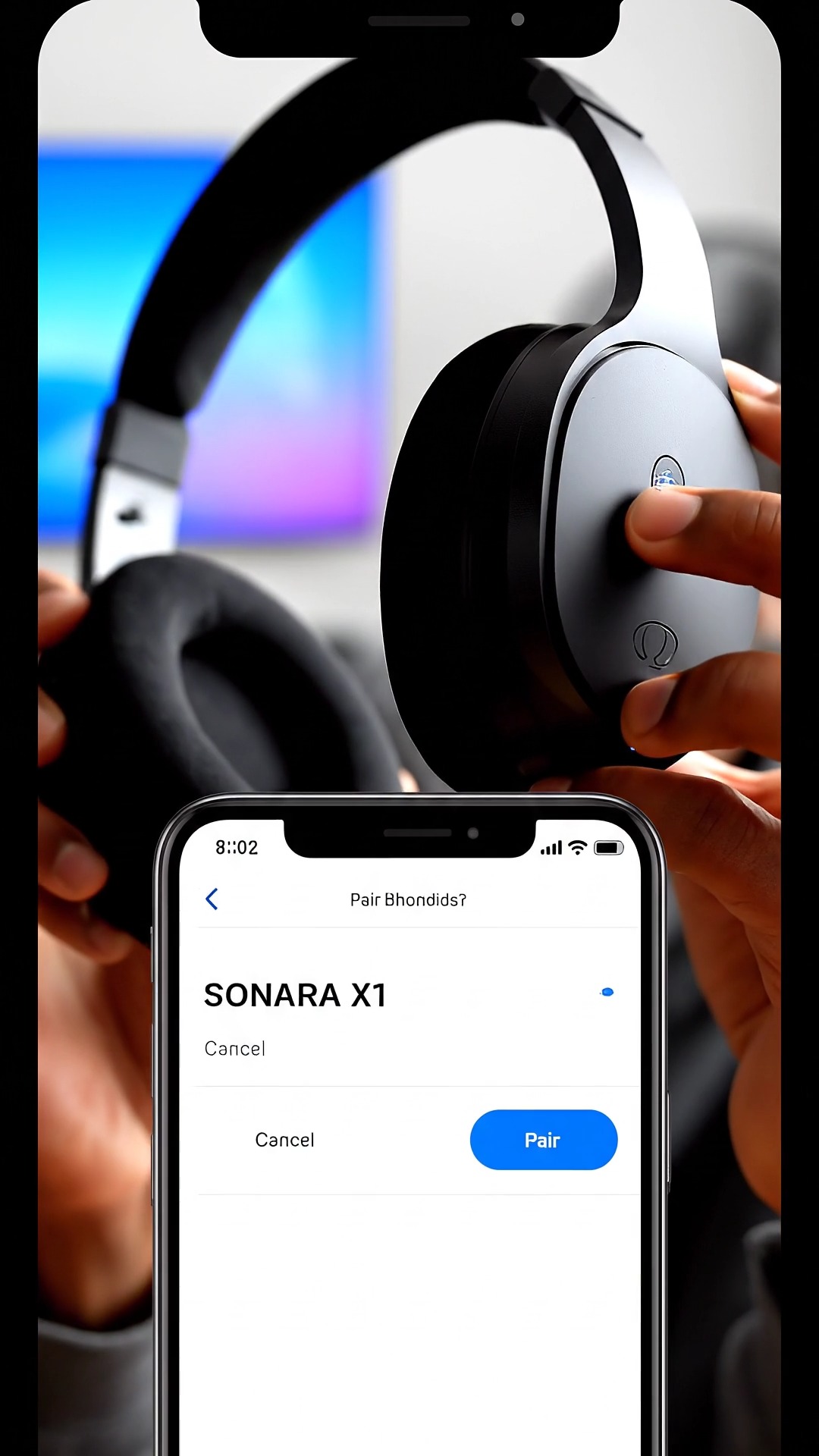
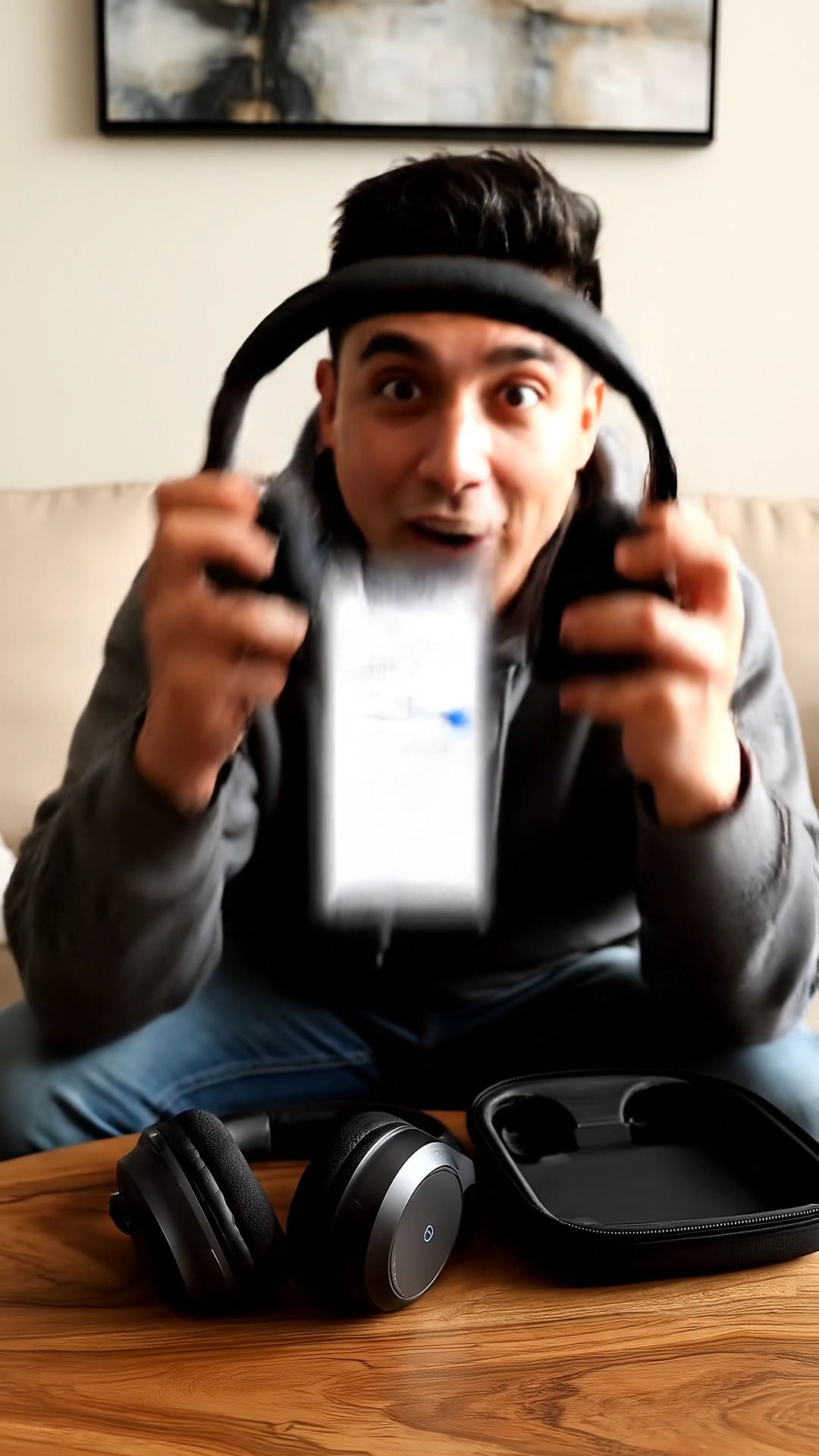
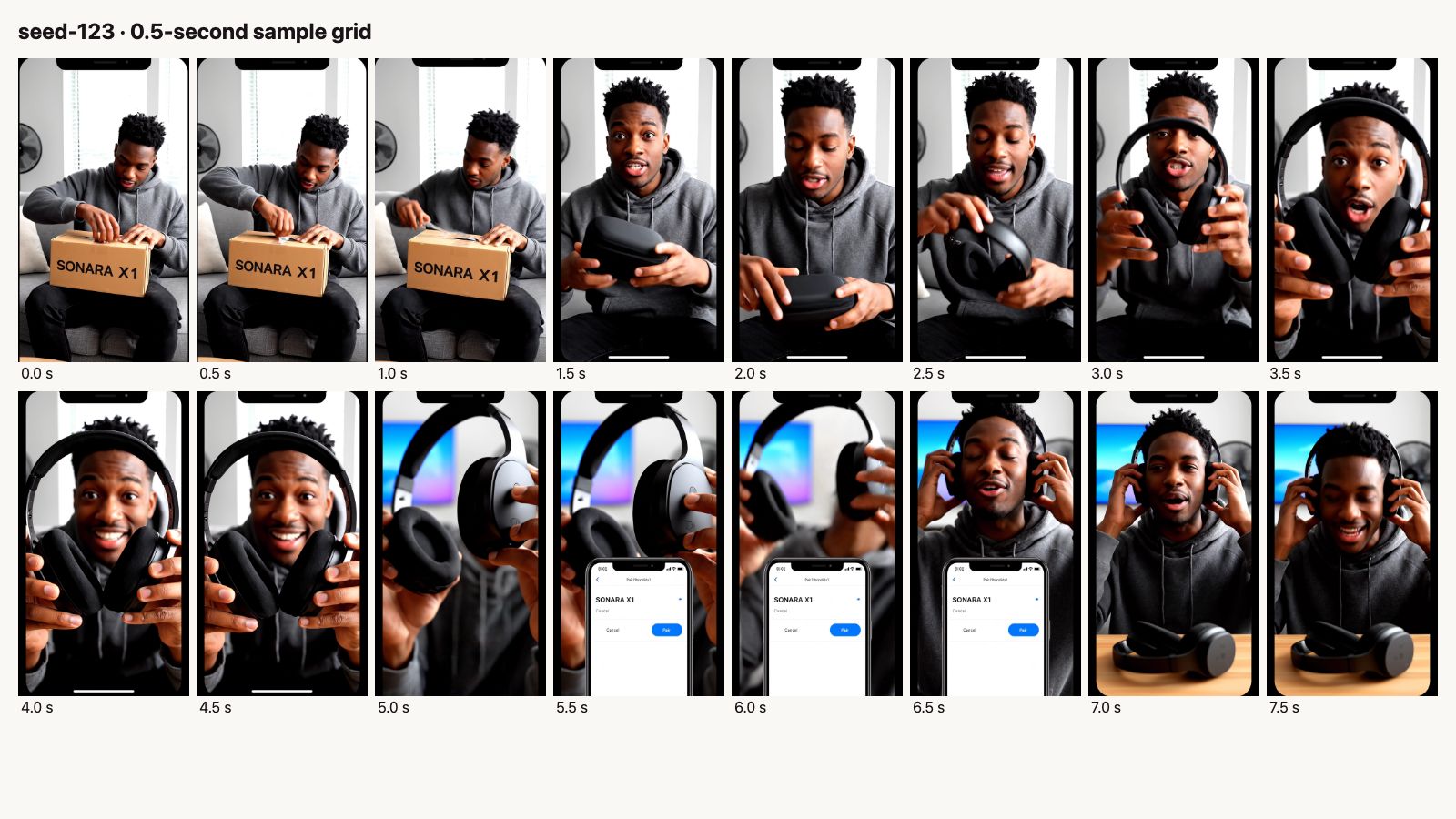
Seed 123 allocated much of the clip to holding and displaying the headphones, added an unwanted phone-like frame around multiple shots, and ended with headphones both on the presenter and on the table. Its pairing screen also contained a malformed title and repeated Cancel text. The complete experience and ending were not established.
The output’s outer rounded corners, top notch and bottom Home indicator are visible in the source frames themselves. They are not decorations from our video player or evidence layout. A phone-like border around the entire scene is distinct from a physical phone appearing during the scripted pairing shot.
Seed 123 · 3s
Seed 123 · 5.5s
Seed 123 · 7s
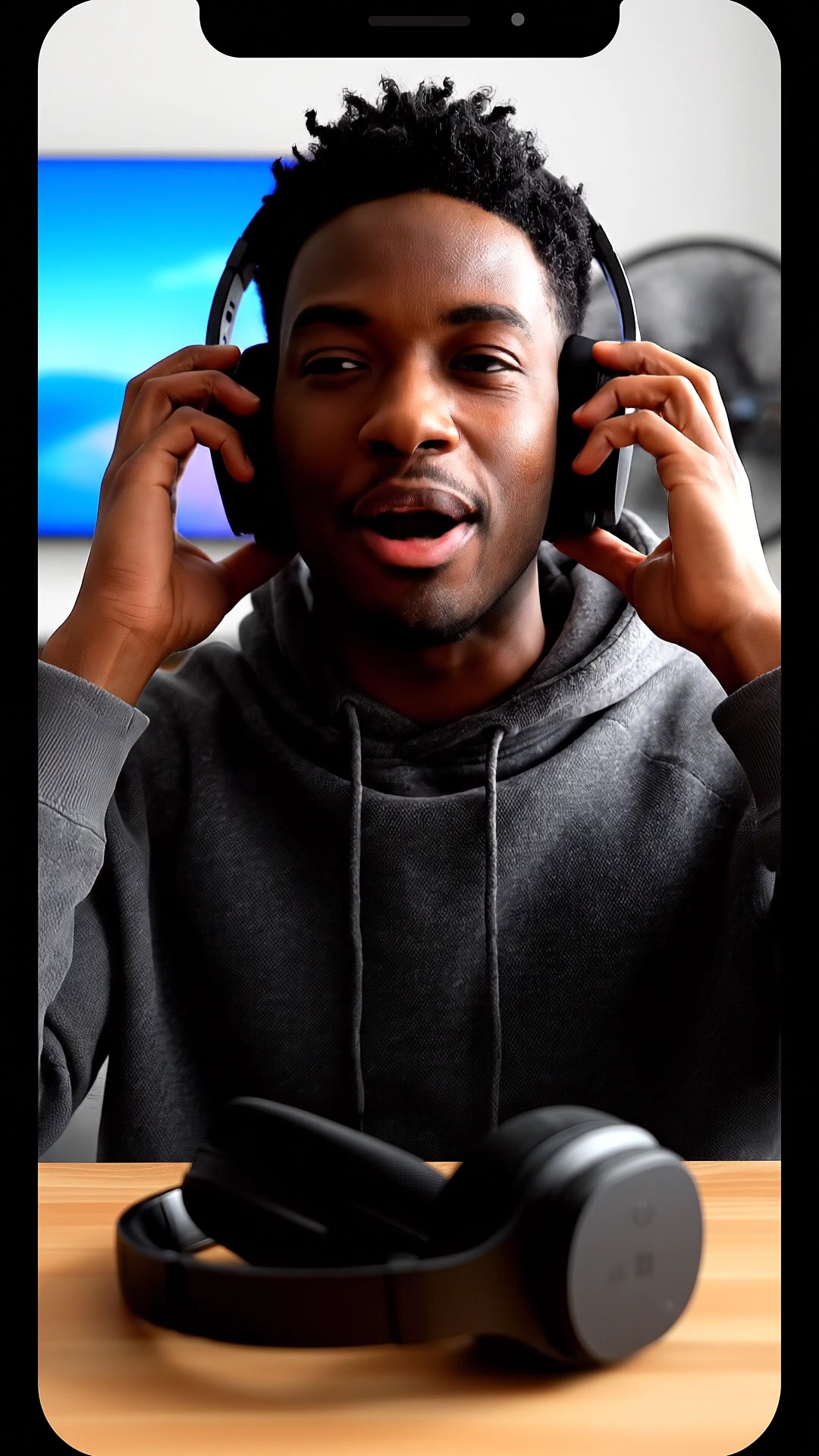
Seed 123: a phone-like outer frame at 3s, malformed pairing text and duplicate Cancel labels at 5.5s, and two pairs of headphones visible at 7s. Actual output samples; times identify half-second sampling targets. Click a frame to inspect the original resolution.
Around 5.5 seconds the phone screen shows SONARA X1 and a Pair button, but its heading does not match the target, and Cancel appears twice. The repeated word is an observable layout/content error. We do not need to infer whether the model understood Bluetooth to identify this mismatch.
At approximately 7 seconds, one pair is worn and another rests on the table. The script follows one pair through the demonstration; it does not introduce a second unit. This makes object count a separate continuity failure from whether the presenter’s clothing or the room stays consistent.
The closing view continues to feature the presenter rather than completing the required independent product arrangement with an open case and playlist. The frames do not establish the full lean-back, closed-eye, knee-tapping and ear-cup-lifting sequence. That finding should not be extended into a claim that the noise-cancelling audio failed, because its sound change was not checked.
Inspect Seed 123: original video and chronological sample sheet
Seed 2026: what happened when pairing arrived near the end?
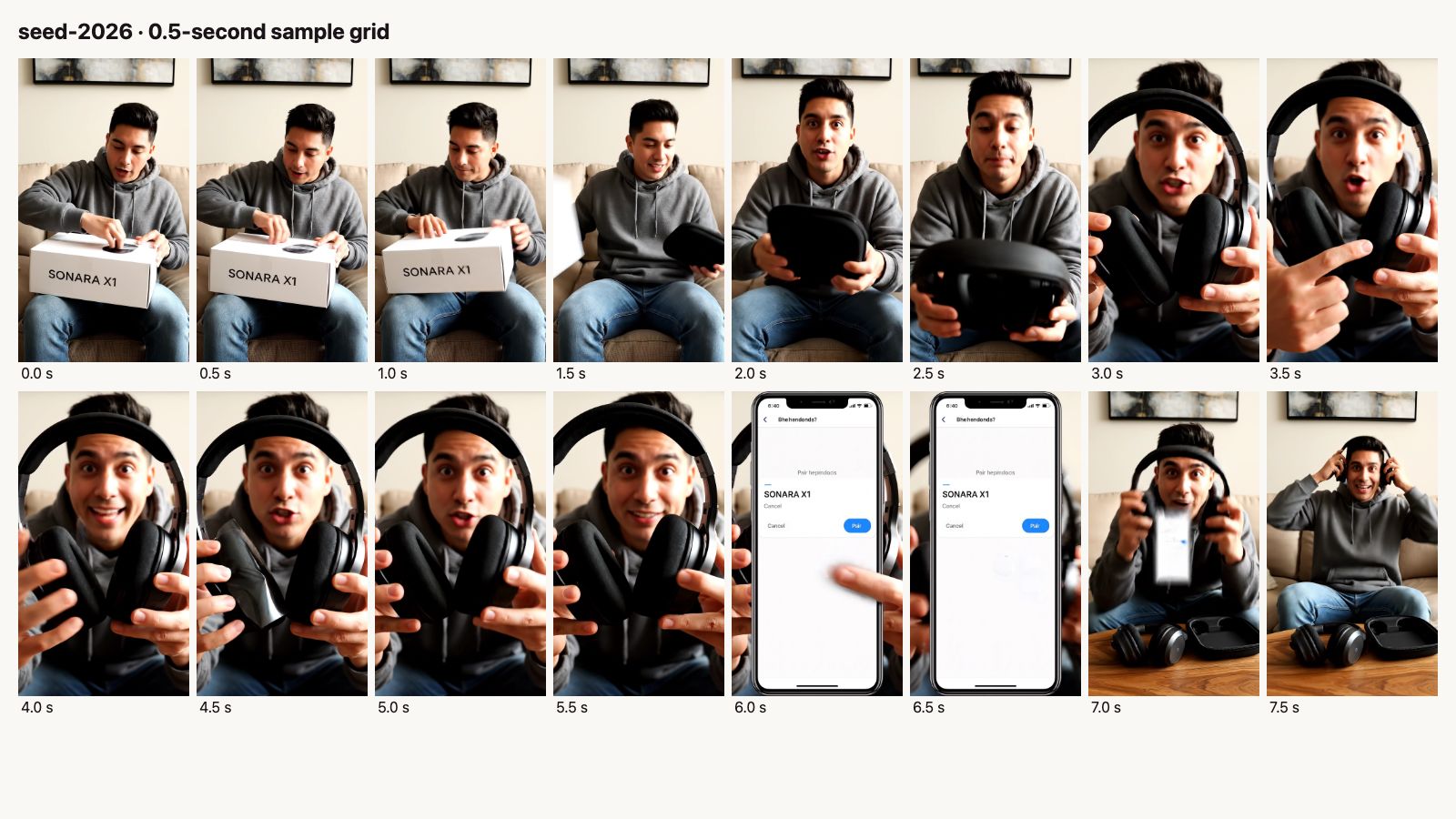
Seed 2026 spent much of the available time presenting the headphones. The pairing interface appeared around six seconds and the wearing sequence around seven seconds, leaving the reviewed ending without the complete listening experience or an independent product finish. It repeated the malformed text and extra-headphones problems seen in Seed 123.
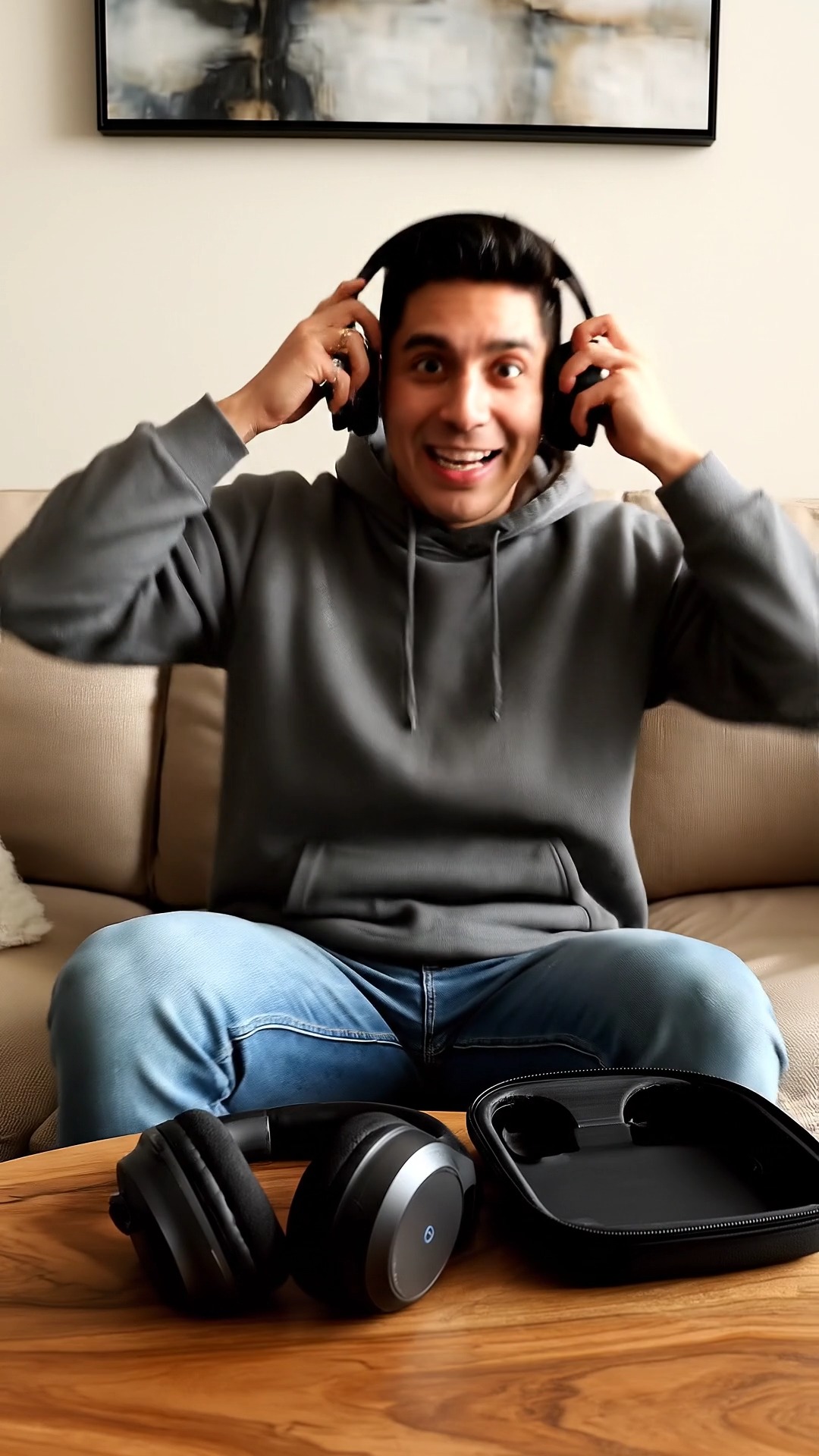
The samples show headphone presentation from approximately 3 to 5.5 seconds. At 6 and 6.5 seconds, the phone view contains an incorrect heading and two Cancel labels. At 7 seconds the image has shifted toward wearing, with a conspicuous bright phone-like region during the transition; the exact motion mechanism cannot be diagnosed from these separated frames.
Seed 2026 · 6s
Seed 2026 · 7s
Seed 2026 · 7.5s
Seed 2026: incorrect dialog at 6s, an anomalous transition toward wearing at 7s, and worn plus tabletop headphones at 7.5s. Actual output samples; times identify half-second sampling targets. Click a frame to inspect the original resolution.
The final sampled composition includes a pair on the presenter and another on the table. An open case is visible, but that alone does not satisfy the hero-shot requirement: the scene remains a wearing shot rather than the requested independent arrangement with a playlist display.
Late pairing is a useful observation about this output’s allocation of time. It is not proof that eight seconds is the sole cause. We did not rerun the same brief at a different duration or remove one demand while holding the others constant. Task overload is a possible explanation to investigate, not a diagnosis established by the timeline.
Inspect Seed 2026: original video and chronological sample sheet
Changing the seed altered the presenter and distribution of shots without producing an accepted execution of the full script. The specified dialog was inaccurate in all three reviewed files; an extra pair of headphones was visible in two. These are counts within this small collection, not estimates of a model’s general error rate.
Acceptance item
Seed 42
Seed 123
Seed 2026
Complete exact pairing text
Not met
Not met; repeated Cancel
Not met; repeated Cancel
Unrequested second pair
Not established in reviewed samples
Visible around 7s
Visible at the ending
Specified final product composition
Partial product close-up
Not completed
Not completed
All physical actions in order
Not established
Not established
Not established
Exact double-tap / wearing mechanics
Unassessed
Unassessed
Unassessed
Dialogue, ASMR, noise change, lip sync
Unassessed
Unassessed
Unassessed
The distinction between “not established” and “not met” matters. The screenshots directly contradict an exact text target. They do not capture every moment of a short gesture. Missing confirmation from half-second samples should not be turned into a definitive assertion that every unobserved motion never happened.
Nor should consistent clothing be treated as global continuity. Product count, control placement, object state and action order are separate dimensions. A believable presenter can share a frame with an impossible duplication; a convincing phone can display the wrong words.
That is why checking video files before delivery and checking script compliance are complementary. Correct duration and resolution establish a usable file format, not a correct product demonstration. For a broader discussion of generated lettering, the video text-distortion article addresses a different search intent from this three-seed evidence review.
What do these three outputs prove—and leave unanswered?
This test does not support recommending the prompt as a verified recipe for the specified complete ad. It does not support a model-wide success rate, a claim that usable UGC is impossible, or a verified repair. No shorter script, removed dialog or longer-duration alternative was generated in this round.
The seven segment labels conceal multiple demands inside each segment. Material inspection alone includes peeling, hinge contact, headband flexing and cushion compression. Pairing adds exact lettering, a button interaction and a transition into wearing. Competing requirements may help explain omissions or compressed sequences, but a controlled comparison is needed to distinguish that hypothesis from other causes.
The API made the input records explicit and allowed the seed to vary while the recorded prompt and other settings remained constant. There was no interface comparison in this headphone test, so it provides no evidence that API access improves visual quality. It also provides no repeatability evidence for a fixed seed: each seed was run once in the reviewed collection.
For the separate question of repeatability, see the seed reproducibility guide. The coffee-machine failure case illustrates a related evaluation mistake—counting story stages instead of correct actions—but it used a different brief and iteration design. Combining the cases into one success-rate denominator would obscure those differences.
The immediate lesson is about acceptance, not a proven prompting trick. Review exact text as exact text, inventory the objects in the same frame, and keep action mechanics and audio as separate checks. A plausible product-review aesthetic is insufficient when the deliverable promises a particular interaction sequence.
A future experiment could simplify the actions, isolate the interface, or test another supported duration, with one change at a time. Those remain proposed experiments. This article does not present them as solved workflows, and it makes no cost or generation-speed claim because this review did not validate those measures.
Frequently asked questions
Was Seed 42 a successful version?
No. Its overall story was recognizable, but the pairing text and final composition did not fully meet the brief, and several actions were unverified. Broad coverage did not justify accepting the complete ad.
Did testing three seeds fix the headphone ad?
No accepted complete execution was established. The outputs varied, but exact text problems persisted and two contained an extra pair of headphones. This is a finding about these three outputs, not every possible seed.
Did the noise-cancelling demonstration sound wrong?
That was not assessed. The files contain audio tracks, but no listening audit of noise reduction, dialogue, effects or lip synchronization was completed. A facial reaction cannot substitute for that check.
Does using the same seed guarantee the same video?
This test does not establish that. It used three different seeds and did not repeat one seed under the same conditions. No guarantee of complete reproduction follows from these records.
Can a shorter prompt or longer clip solve the failures?
Possibly, but neither was tested in this round. They should be described as hypotheses, with new outputs reviewed against explicit acceptance criteria before claiming a fix.
Read next: native-audio evaluation covers the listening and synchronization checks that remain outside this visual review.
Playback files are web encodes of the supplied originals, with no editorial cuts. The reported hashes, frame samples and source-track measurements refer to the original files retained in the editorial archive. Compression can alter fine image and audio details; the original files were not replaced.
AI Video
Prompt Review
Case Study
Build faster with one AI API.
Use Token360 to call video, image, audio, and text models with one key and one bill.


 Prompt Library
 Prompt Library
 Insights