Review six original image outputs for left/right, depth and partial occlusion. See which layout instructions held and which details remain uncertain.
Token360 editorial team · Original image review · November 4, 2026
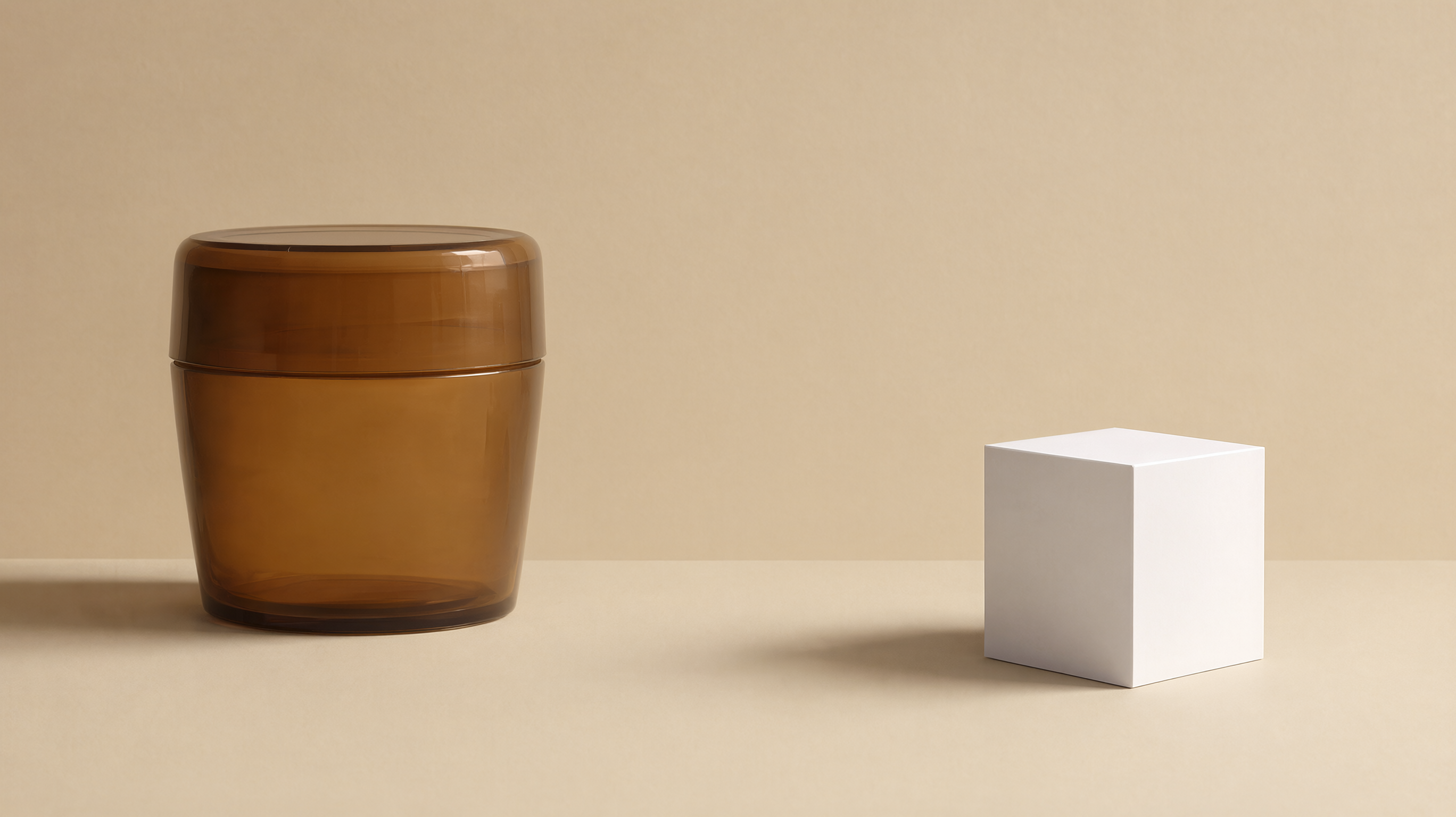
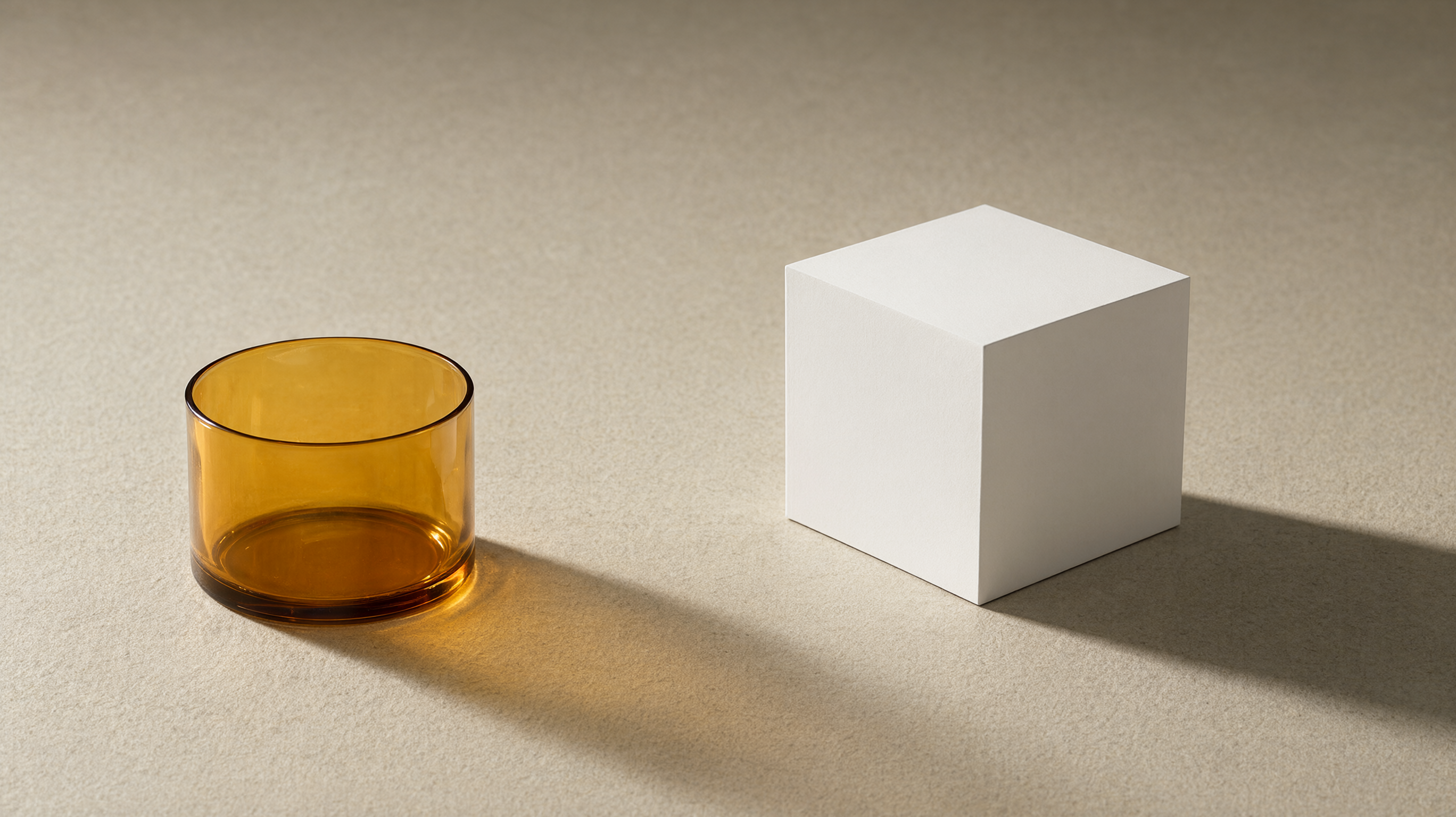
Qwen Image 2.1 Pro placed the amber cylinder on the left and the white cube on the right in both takes. Both overlap images also put the cube in front of the violet sphere. The harder instruction was how much to hide: much of the sphere remained visible in each image. For a storyboard that depends on a partial reveal, check both the order of the props and the amount of the reveal.
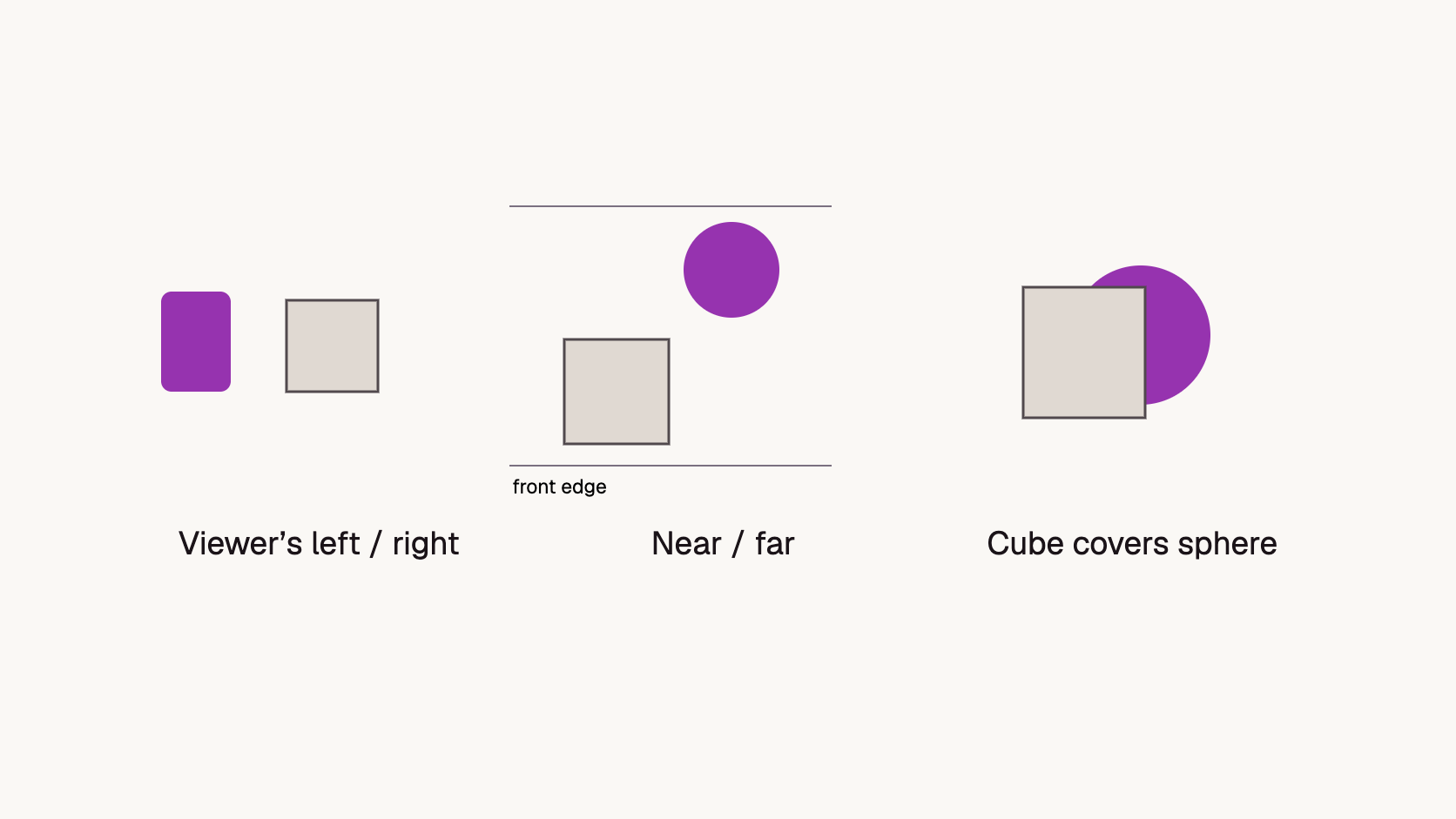
Use the viewer’s left and right, give depth a physical reference such as a table edge, and name which object hides the other. A foreground object can be closer to the camera without covering anything. Test depth and overlap in separate images so one cannot accidentally satisfy the other.
Reference diagrams for reviewers. Generate the six samples from text alone.
Which prompts were used for the six stills?
The Token360 study brief specified Qwen Image 2.1 Pro, text-to-image, two takes per prompt and no reference image. We inspected all six supplied PNGs at their original proportions. Four were 2736 × 1536 and two were 2512 × 1680. The files establish the exported sizes; seed and other run settings were not independently verified. Differences between takes may reflect framing as well as generation variability.
Left and right
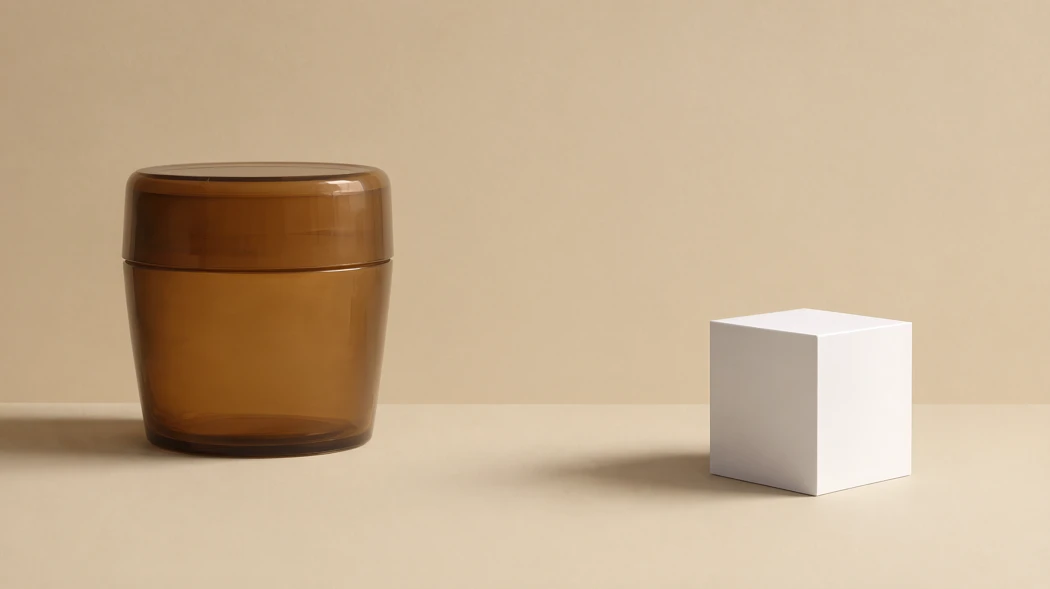
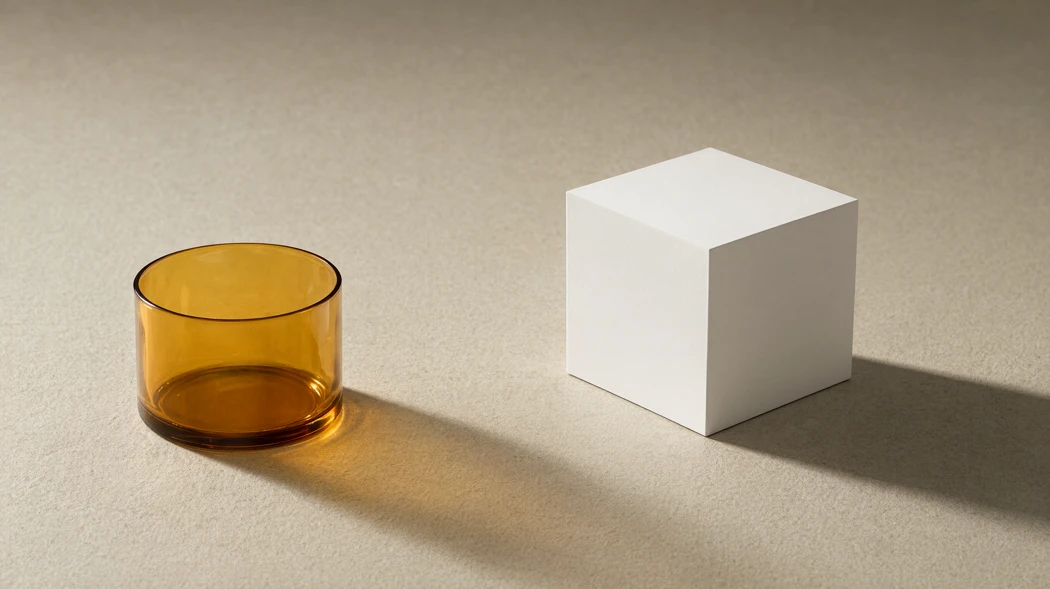
One storyboard still, viewed slightly from above a bare tabletop. An amber cylinder stands on the viewer’s left and a white cube stands on the viewer’s right. Leave a clear gap between them. Show both objects completely.
Foreground and background
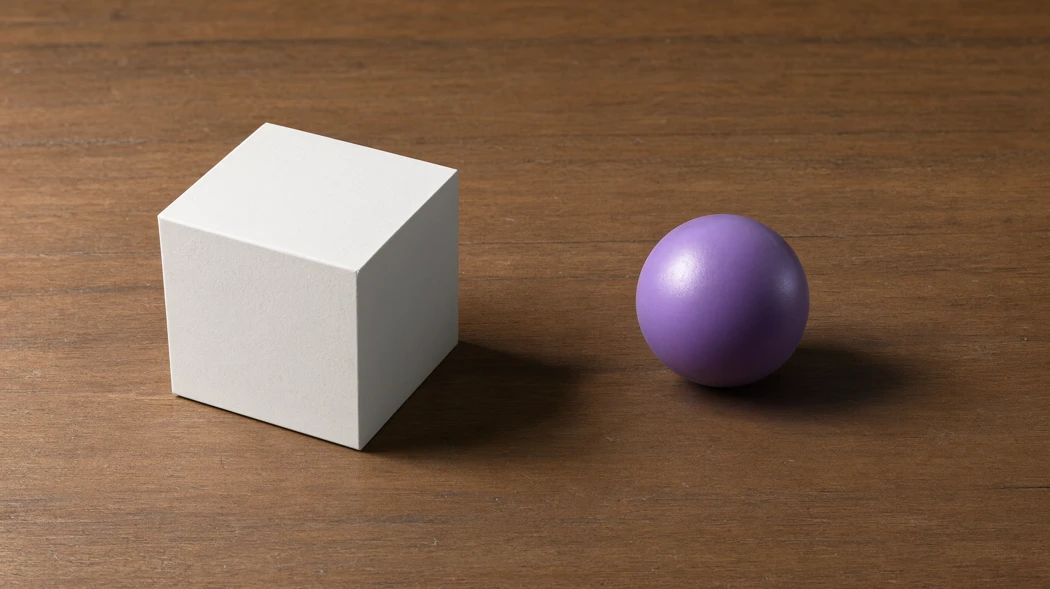
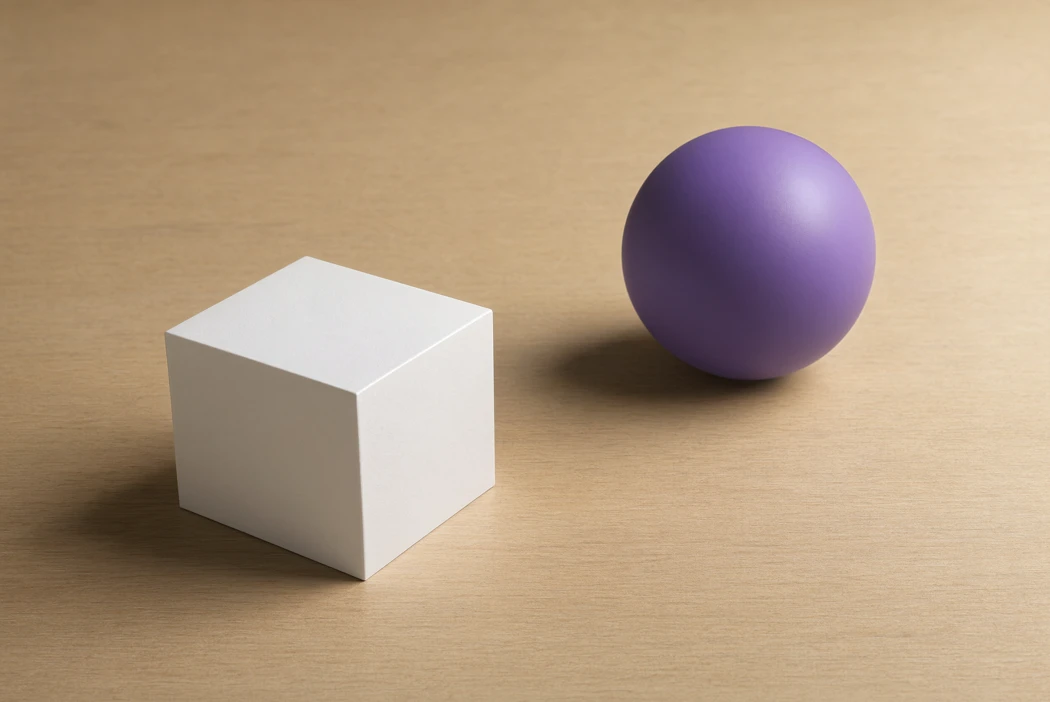
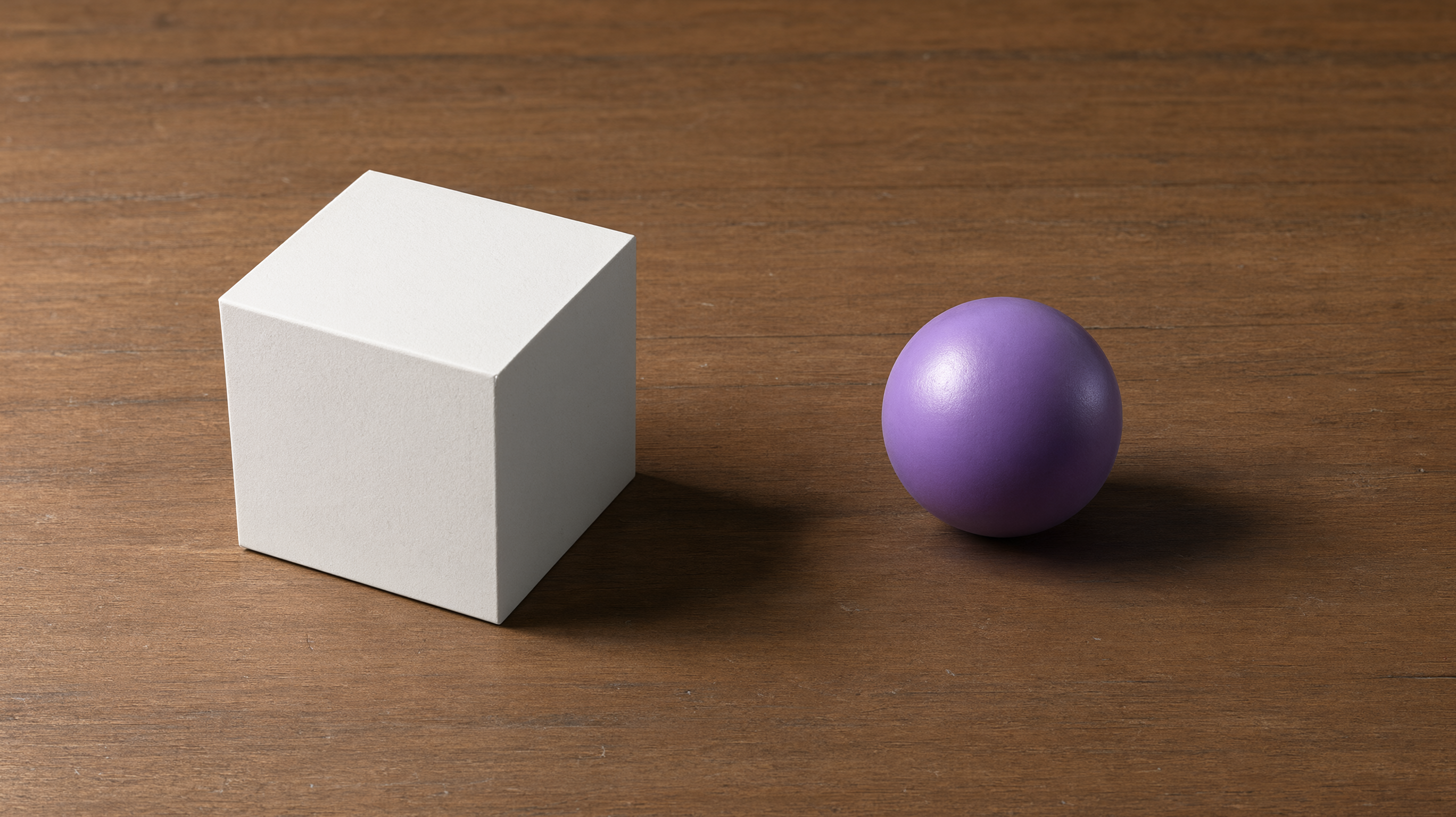
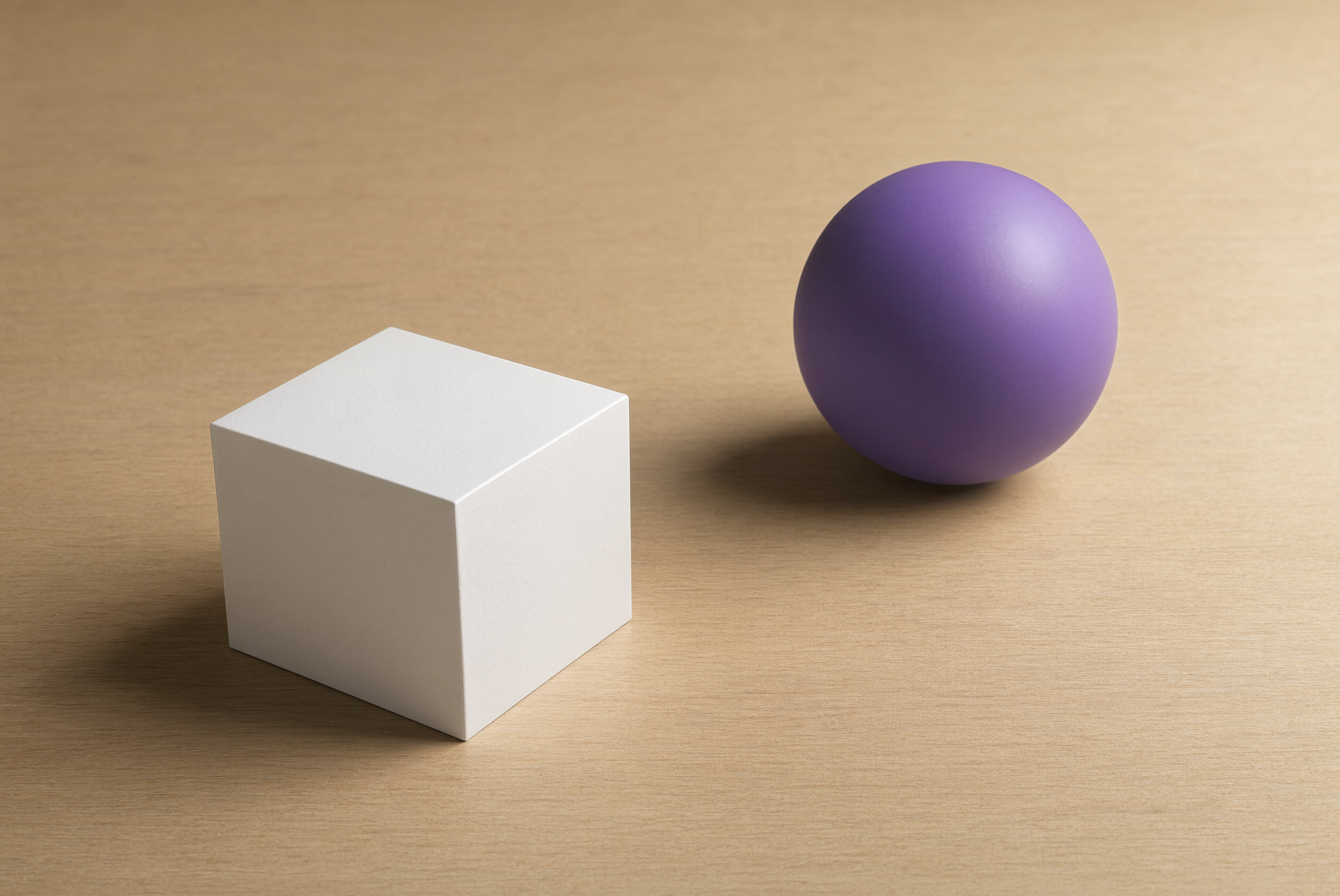
One storyboard still, viewed slightly from above a bare tabletop. A white cube sits near the front edge of the table. A violet sphere sits farther from the camera near the back edge, slightly to the right of the cube. Leave a visible gap between their outlines.
Partial occlusion
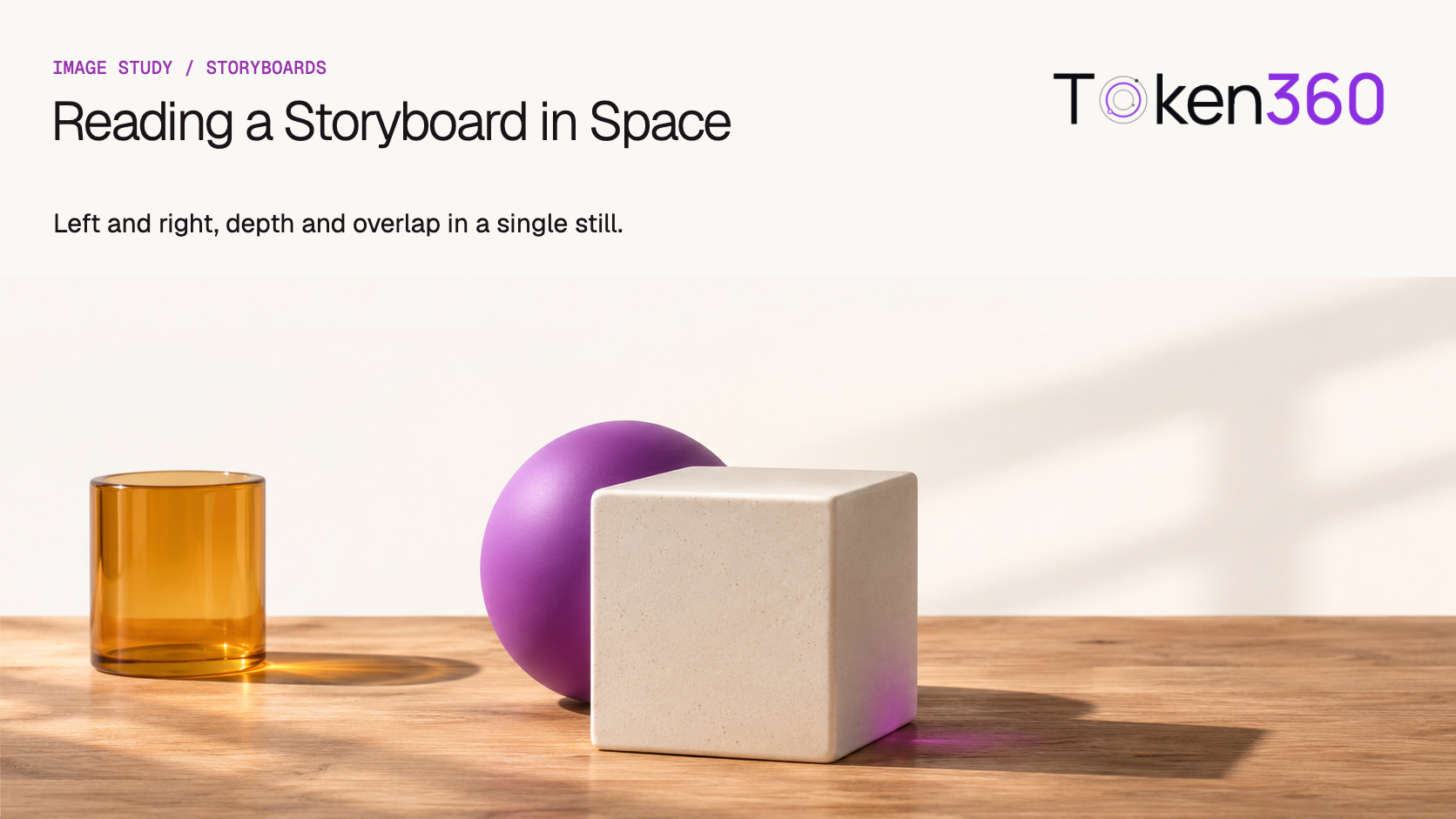
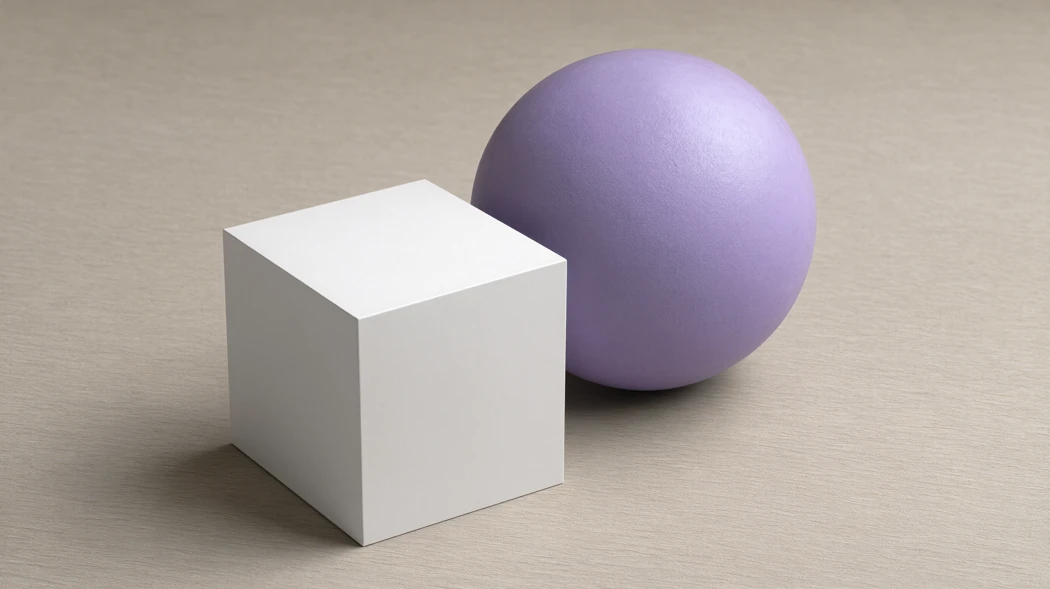
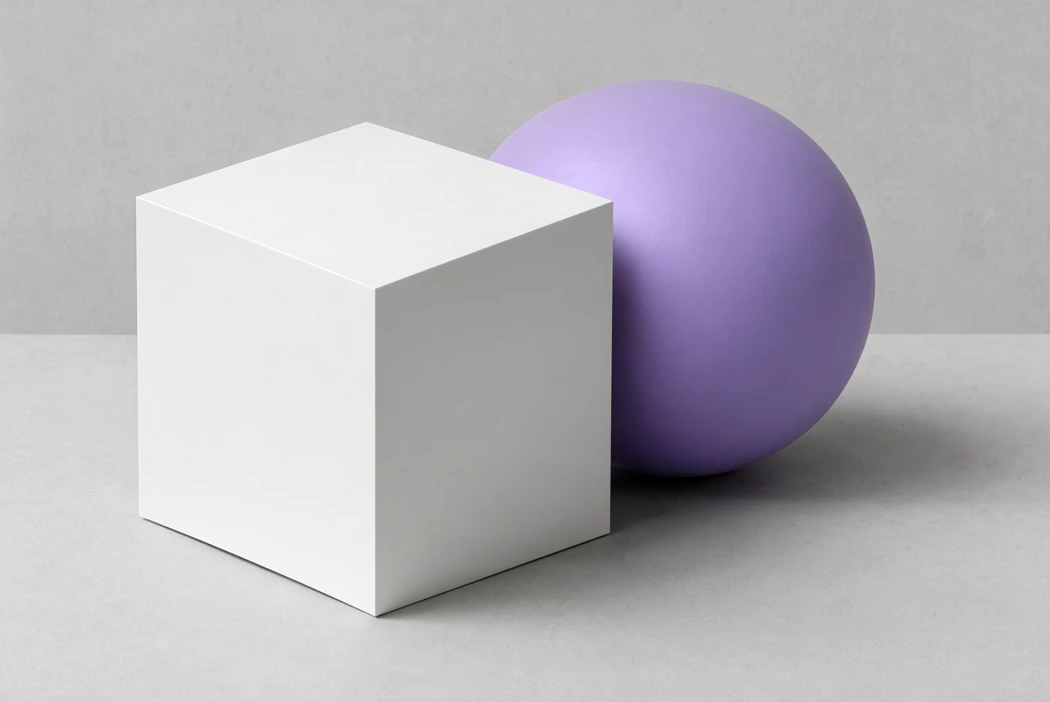
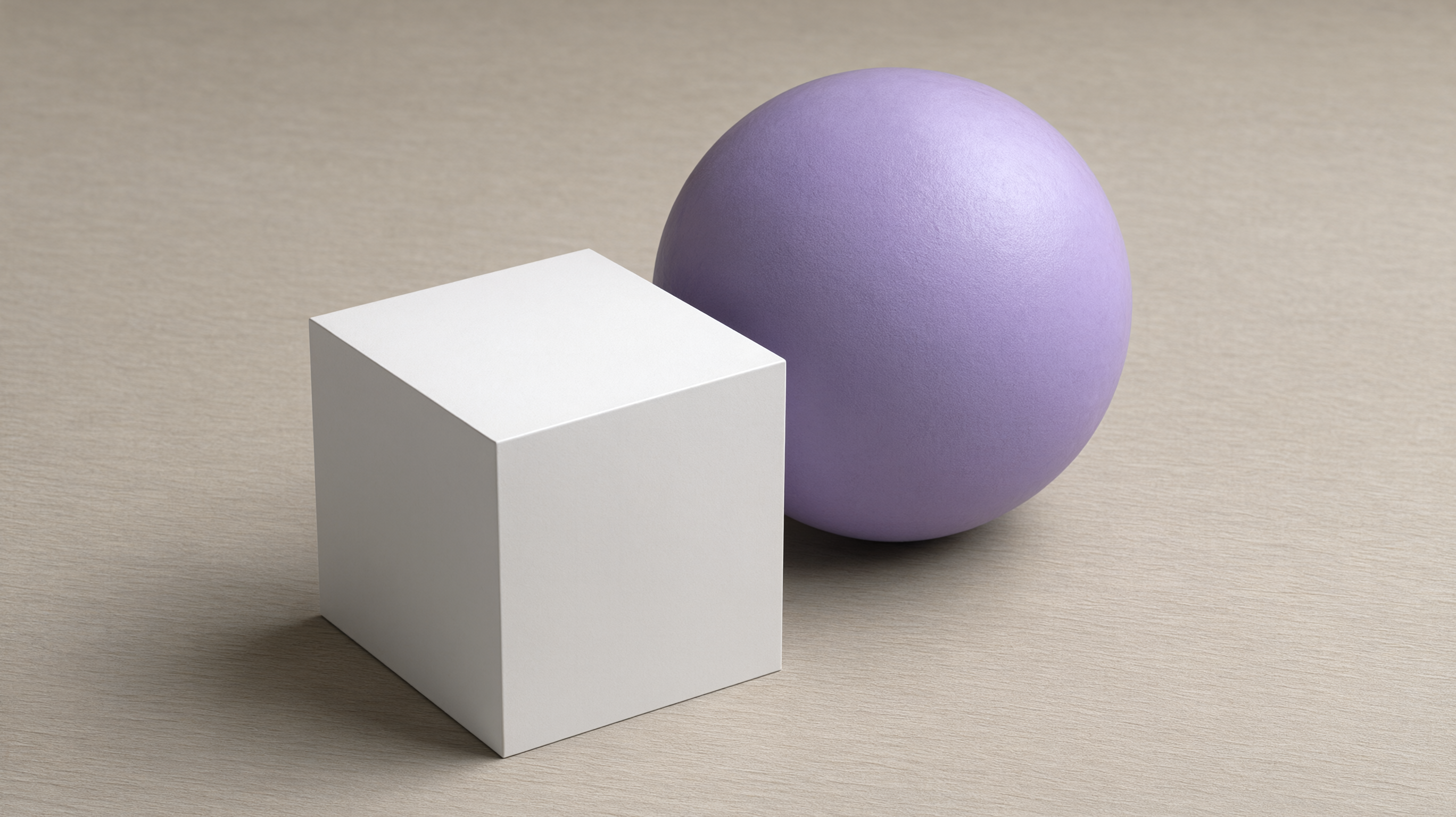
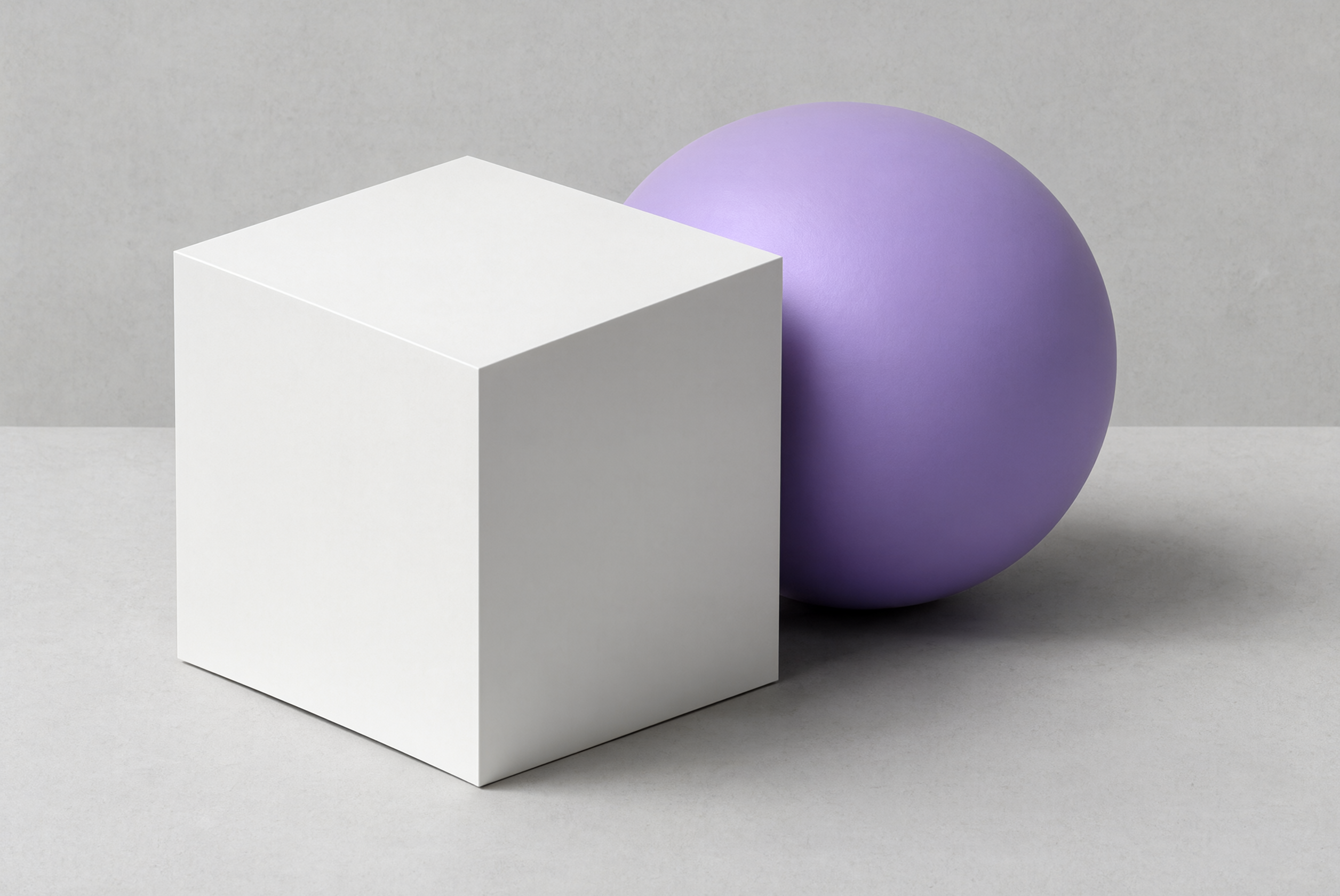
One storyboard still, viewed slightly from above a bare tabletop. A white cube stands in front of a violet sphere. The cube hides the left half of the sphere. The right half of the sphere protrudes beyond the right edge of the cube.
How should the six stills be scored?
For the first pair, check cylinder left, cube right, both complete and a gap between them. For the second, use the front and back edges of the table to judge the floor positions of the two objects. A smaller sphere alone leaves depth ambiguous. For the third, trace the outline where the objects meet. The cube’s edge should continue across the sphere, leaving the sphere visible to the right. Score the direction of overlap separately from how close the coverage looks to half.
Mark each relation as satisfied, reversed, or unclear. Also record missing and extra objects. Keep both takes even when one reads much better. A split pair tells an editor which instruction to check before handing the image to an animator.
How closely did the six images match the blocking?
The lateral pair preserved left/right placement and separation. Depth was less fully verifiable because the requested table edges were absent. The overlap pair put the cube in front, but neither clearly met the approximate half-coverage target. The following observations keep those requirements separate rather than assigning one aggregate success score.
Left and right held in both takes
Both takes satisfy the side, separation and visibility requirements. The prop design changed, but the brief allowed either interpretation of “cylinder.”
The gap and rightward placement are clear twice. Relative depth reads more clearly in take 2. Neither composition shows both requested table edges, so the exact near-edge and far-edge placements remain unverified in both.
Both cubes hid the correct side, but less than requested
Both takes satisfy foreground order and right-side protrusion. Neither clearly satisfies the half-coverage target by visual review. The estimate concerns the sphere’s projected silhouette in the image; no hidden area was measured.
For the next shot, choose the frame according to the edit. Either lateral take leaves a clean gap for adding a third prop. Depth take 2 gives a director a clearer foreground cue. For an edit that starts with exactly half a sphere hidden, ask for another blocking pass or place the objects against a drawn guide before animation. That decision follows from the six frames shown here.
How should a storyboard reviewer resolve ambiguous depth?
Use evidence tied to the requested scene rather than a single visual cue. A smaller sphere might be farther away, physically smaller, or both. A higher contact point on a tabletop is useful context, but it does not independently establish the specified front-edge and back-edge placements when those edges are absent.
For this brief, keep the missing table edges as an unmet verification requirement even when the overall image looks plausible. If those exact edge positions do not matter to the film, revise the brief before the next test. Do not relax the rule after seeing a preferred output and then report a better pass rate.
When does approximate occlusion need a measured layout?
A rough reveal can be reviewed visually. A precise half-hidden product needs an explicit screen-space target and a reproducible measurement convention. Define whether “half” refers to projected silhouette area or horizontal width; those measures can disagree for a sphere.
The six-image review used a qualitative silhouette judgment and did not recover the hidden contour. Keep that limitation with the result. For an exact layout, prepare a controlled reference or composited arrangement, then test a compatible animation route. Text-only generation can explore blocking, but the requested geometry still needs acceptance before it becomes the starting frame of a production shot.
Read the six images as a constraint matrix
A compact matrix makes partial success visible without converting a qualitative review into a general model score. The following entries summarize the observations already described above. “Unverified” means the image lacks the evidence needed for that constraint; it is not permission to count the take as a pass.
Pair / take
Required relationship
Judgment from existing review
Lateral 1 and 2
Cylinder left, cube right, gap, both complete
Satisfied in both
Depth 1
Cube near front edge; sphere near back edge
Exact edge placement unverified; both edges are absent
Depth 2
Same depth requirement
Stronger depth cue, but exact edge placement still unverified
Overlap 1 and 2
Cube in front; sphere protrudes right
Satisfied in both
Overlap 1 and 2
Approximately half the sphere hidden
Not clearly satisfied in either; qualitative review only
The tester confirms Token360 Playground as the generation interface. For a measured follow-up, define whether “half” means projected silhouette area or horizontal width before generating. Do not back-fill a numerical coverage percentage from these qualitative judgments. If exact screen geometry matters, use a controlled reference layout and preserve its intended coordinates alongside the output.
When a generated storyboard becomes a motion reference, continue with image-to-video input validation to check its crop and framing before requesting motion. Keep the spatial acceptance criteria in the model evaluation record so later video reviews can distinguish an input-layout issue from a motion-generation issue.
Frequently asked questions
Should the generated image match the reference diagram pixel for pixel?
The brief specifies relationships and approximate coverage. Either object can move within the frame while those requirements still hold. Use a precise coordinate system only when the delivery brief requires one. See the W3C guide to viewports and coordinates for a formal way to describe positions.
Can these six runs rank storyboard generators?
The study uses a single model and one tabletop setting. Its six original images can show which of these directions held up across both takes. Broader comparisons require other scenes and models.
Editorial revision: November 4, 2026. Test dates and dated source snapshots remain as stated in the article.
The linked full-resolution sources are lossless WebP copies with decoded RGBA pixels checked against the original PNGs. Original PNGs remain in the editorial archive.
API
Video
Production Workflow
Build faster with one AI API.
Use Token360 to call video, image, audio, and text models with one key and one bill.


 Prompt Library
 Insights
 Insights