An interview cleanup handoff must let the editor trace every processed passage back to the recorded performance. Keep the untouched source, map source ranges to the picture timeline, document unresolved words, and deliver the selected audio with room tone and an approval record. A quieter file alone is not a finished interview edit.
This article follows a fictional customer-interview assignment from source logging to editorial handoff. The filenames, times and decisions below are teaching examples, not results from a processed recording or a customer engagement. No audio test or preservation guarantee is claimed.
Assignment ·
Edit map ·
Review decisions ·
Delivery package ·
Sign-off
What is the interview editor delivering?
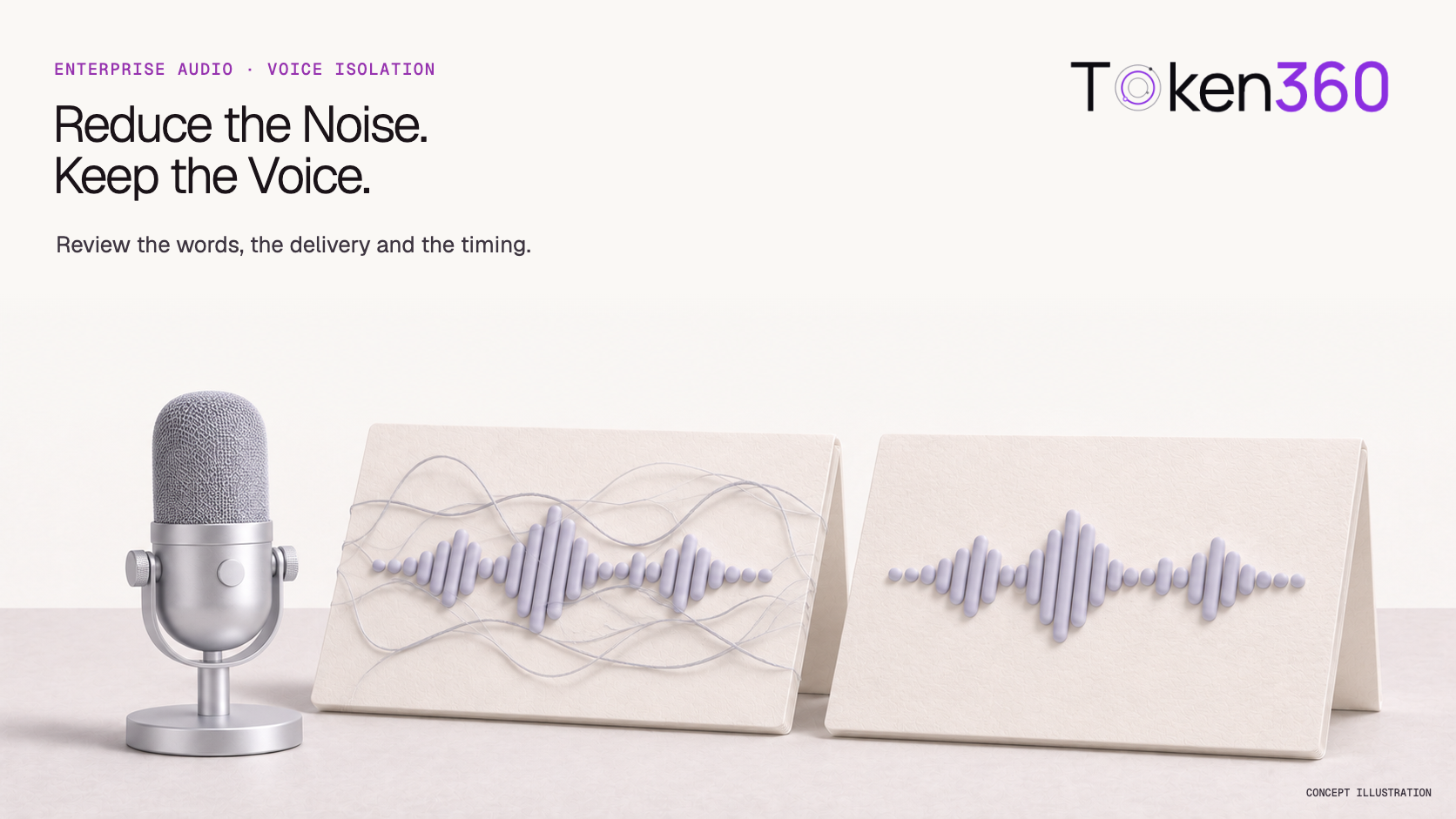
The assignment is a short customer interview cut from an existing approved performance. Cleanup may reduce a room hum, but it may not replace words, remove a qualification from the answer or synthesize a stronger testimonial. The editor owns the final assembled mix and picture synchronization, including any manual repair after processing.
In this example, source INT-A contains the answer “The trial worked for our support team, but we have not rolled it out company-wide.” The qualification must remain. A shorter edit that changes that meaning fails even if every retained word sounds clean. Record the approved wording before selecting a cleanup candidate.
API availability, provider selection, pricing and data-handling qualification belong in the voice isolation API buying guide. Here, the task begins after the recording is approved for the chosen workflow.
How does the cleaned passage map back to the source?
Record source in and out points separately from sequence positions. Keep one declared time basis throughout the handoff. The example below uses elapsed seconds with exclusive out points; it is not SMPTE timecode. A real job should use the editor’s agreed timecode and frame-rate convention.
| Clip | Source range | Sequence range | Editorial constraint |
|---|
| INT-A / answer | 12.000–24.000 s | 5.000–17.000 s | Retain the complete qualified answer |
| INT-A / room tone | 31.000–34.000 s | Use only where approved | Separate ambience layer; never substitute for missing speech |
The answer occupies 12 seconds in both locations. That is a planning consistency check, not a measurement of a model’s output. If the returned file includes leading silence or a duration change, the editor must measure and reconcile it before insertion. Do not stretch speech silently to make the table appear correct.
What does a useful review note look like?
Write a review note against a source range, identify the audible issue, and name the editorial action. Separate a proposed response from an observed defect. The hypothetical decisions below illustrate the record structure; they do not describe defects found in an actual model output.
| If review finds… | Decision | Record in the handoff |
|---|
| Hum reduced, words and delivery retained | Candidate may advance to picture review | Candidate ID plus reviewer and listening date |
| The word “not” is weakened or missing | Reject that passage | Source range, affected word and retained original |
| A gap sounds unnaturally silent | Review an approved room-tone layer | Layer ID and fade positions |
| Original wording cannot be established | Leave unresolved; seek an authorized clarification or re-record | Do not approve a generated guess |
Compare candidates at comparable listening levels, then listen to the assembled sequence. A transcript cannot reveal metallic artifacts, changed breath timing or an abrupt ambience edit. Keep the source available during review and record any manual repair separately from model processing.
Which files and records belong in the package?
Deliver the untouched source, the selected cleanup candidate, the editorial assembly and a concise decision log. Filenames should identify source and revision without labeling an unapproved file “final.” The example names below are a proposed manifest; the files have not been generated for this article.
| Proposed file | Purpose | Acceptance evidence needed |
|---|
| INT-A_original.wav | Untouched source | Source identity and recording permission |
| INT-A_12-24_cleanup_r02.wav | Selected processed range | Measured duration, sample rate, channels; reviewed words |
| INT-A_roomtone_original.wav | Approved ambience source | Range and permitted placement |
| interview_sequence_r03.wav | Assembled mix | Picture sync at start, middle and end |
| interview_decisions_r03.txt | Review ledger | Source map, candidate ID, manual changes and approval |
Keep original and processed tracks distinct in the editing project. If the model returns audio only, extraction, reintegration, fades and final export remain separate production steps. The client handoff guide covers the broader delivery package.
When can the interview be signed off?
Approve the actual exported sequence only after wording, performance, ambience continuity and picture alignment have been checked. Record the reviewer, date, exact revision and any remaining exceptions. Approval of an isolated preview does not approve a later mix, and a fresh processing revision requires another review of the affected material.
The example is complete as an editorial specification, but it is not a completed before-and-after case. To turn it into one, add an authorized source excerpt, the selected cleaned excerpt, the assembled mix and a filled review log based on listening. Until then, preservation and cleanup quality remain unverified.
For the company’s scope, see Token360’s company introduction. This article does not establish a dedicated Token360 cleanup endpoint.
About the author
Yuki Yu is Marketing Manager at Token360.


 Guides
 Guides
 Guides