Nano Banana Pro Brand-Concept Prompt: Is a Name Enough?
Three Nano Banana Pro images share a polished style but miss brand details. Inspect the exact prompt, original outputs, request settings and test limits.
PROMPT LIBRARY · BRAND CONCEPTS · THREE TESTED OUTPUTS
By Yuki Yu · Test date: November 5, 2026 · Editorial update: November 6, 2026
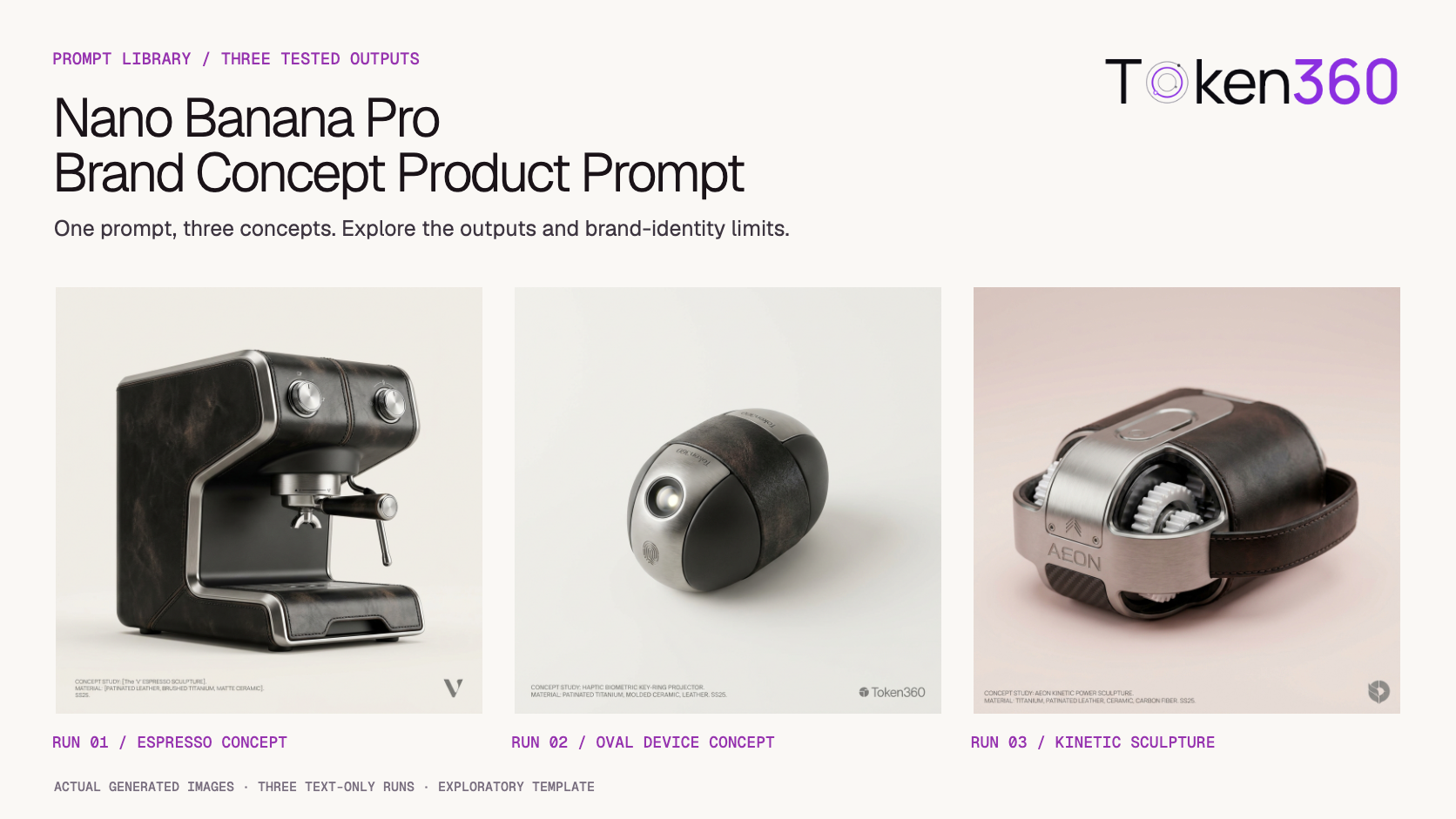
This Nano Banana Pro brand-concept product prompt produced polished editorial-style images, but replacing the brand name alone did not reliably express the brand. Three identical Token360 API requests returned a similar pale-studio, metal-and-leather aesthetic. Brand marks and the apparent purposes of the invented products were less dependable.
This is a first-party record of three supplied outputs, not a model-wide success-rate study. The images are concept explorations, not evidence that Token360 sells the depicted hardware or that the imagined mechanisms work.
Read first: the Token360 image generation API reference explains the request fields. Model selection, image dimensions and reference inputs are separate from the photographic language inside a prompt.
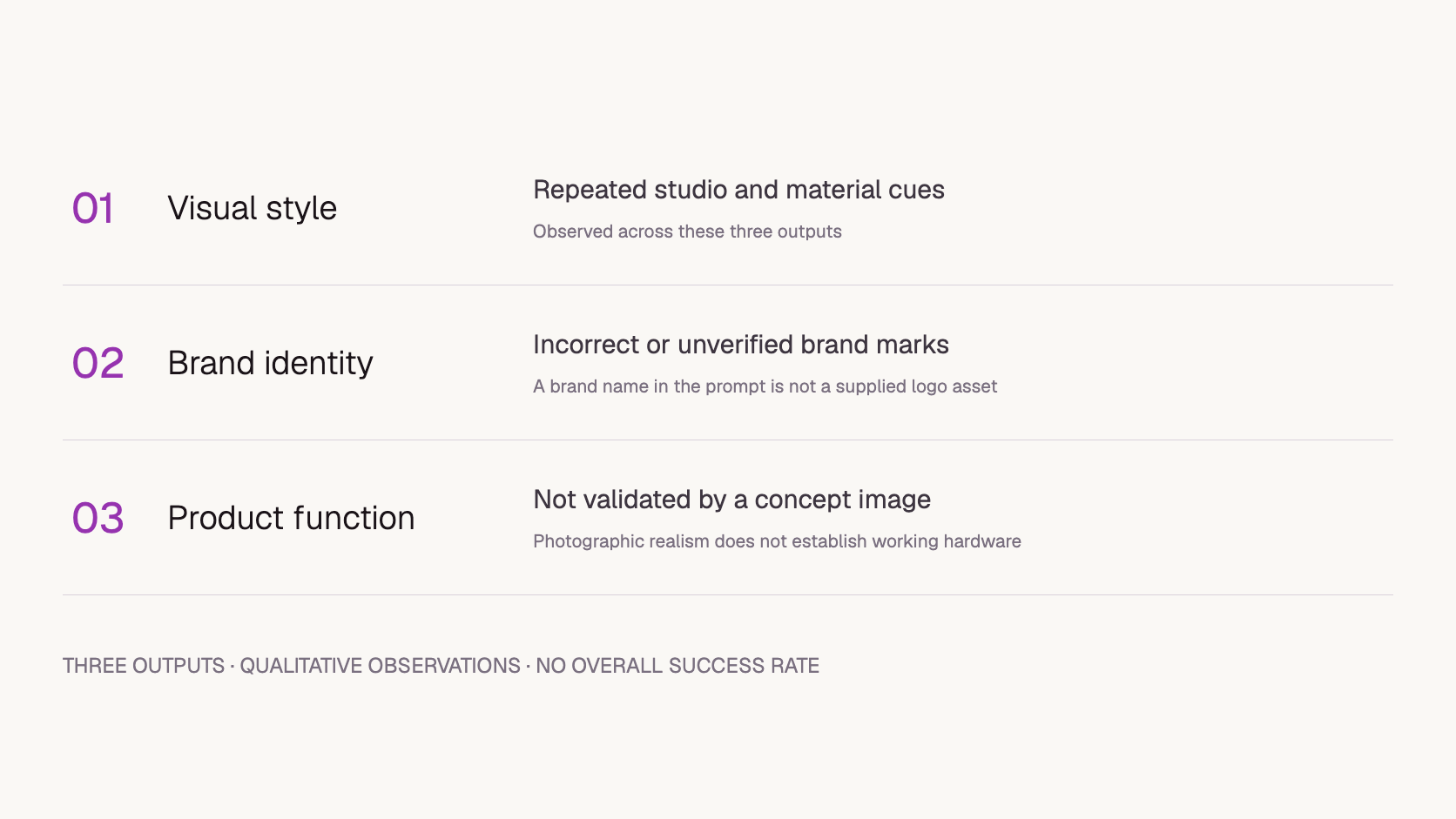
All three images used a pale studio background, one product and small corner text. Different product categories are consistent with the open-ended invention brief; variation alone is not a failure. The more useful questions are whether the purpose is understandable, the brand mark is accurate, and the material choices have a documented connection to the brand.
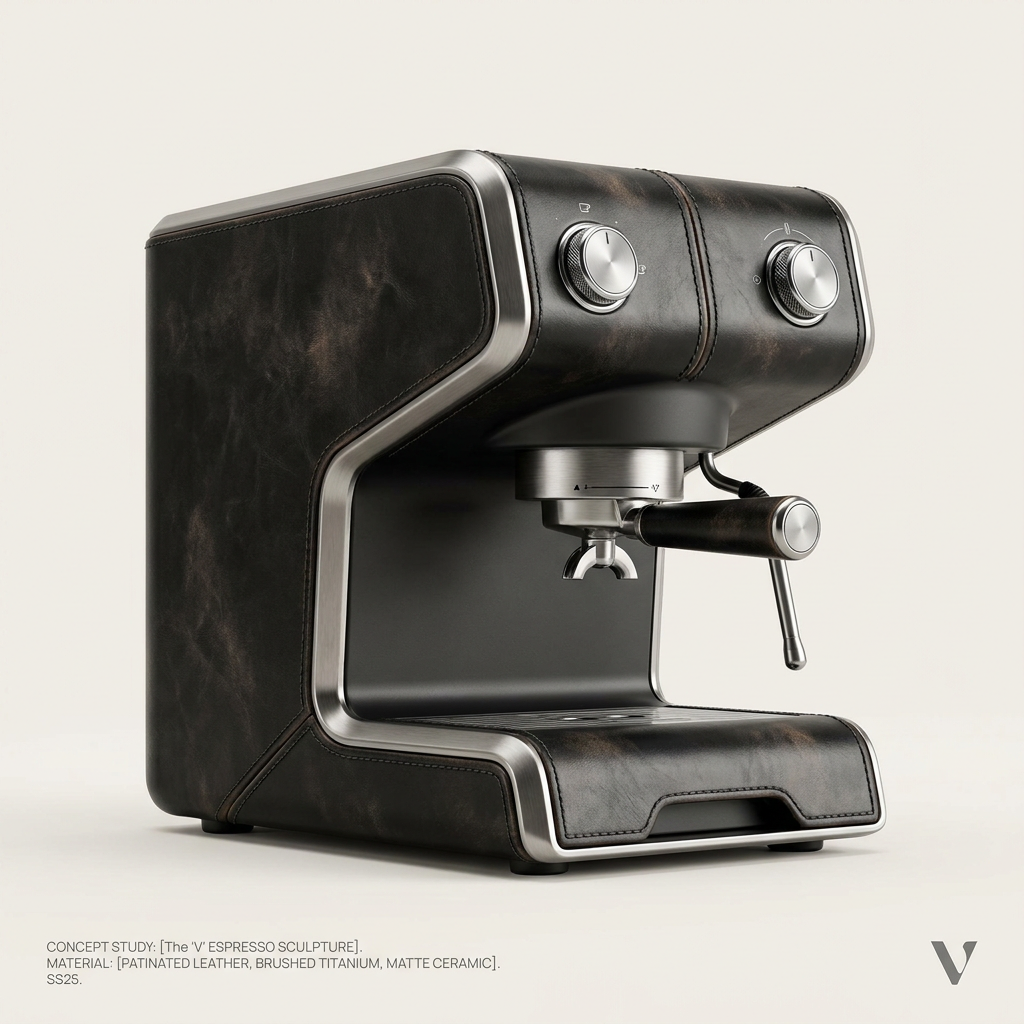
Recognizable category, visible stitching and brushed-metal detail
A V-like mark replaces Token360; the materials have no established connection to its brand
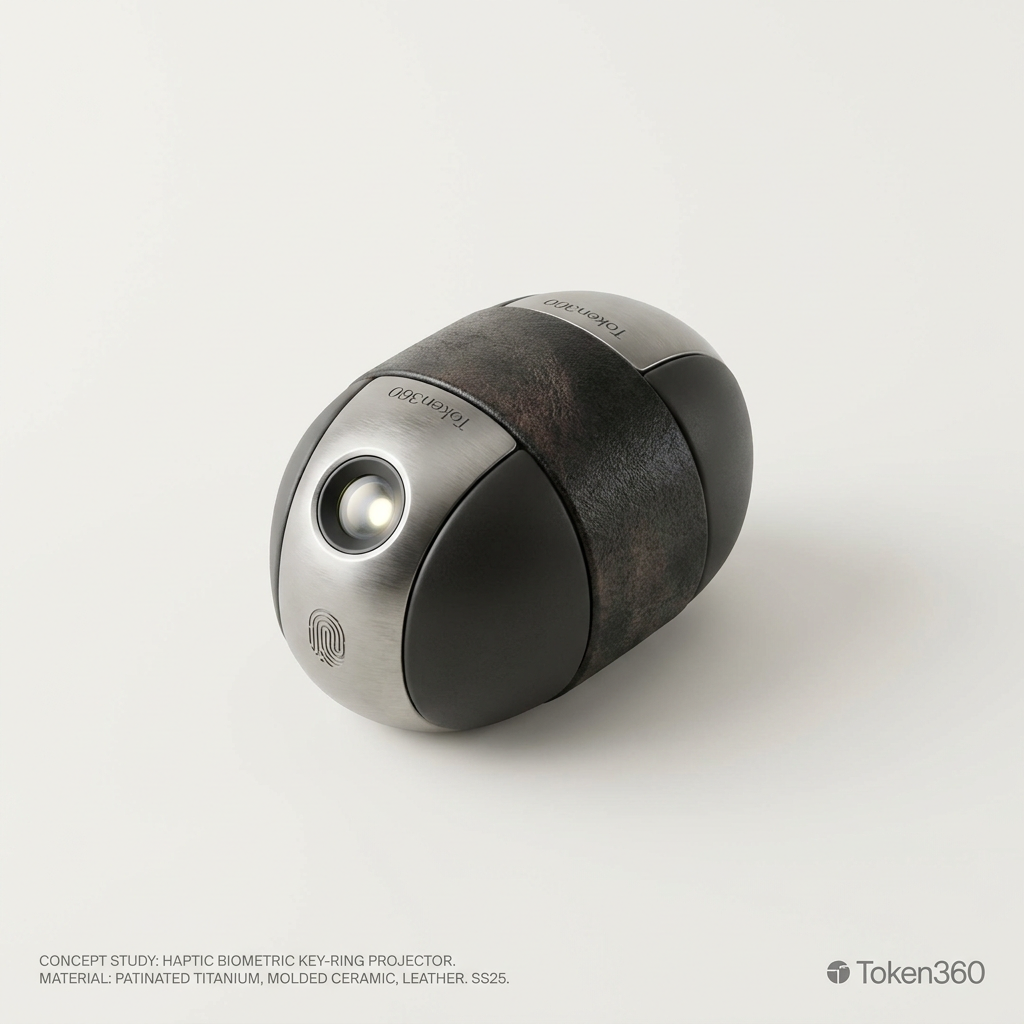
Run 2
Captioned “HAPTIC BIOMETRIC KEY-RING PROJECTOR”
Clean presentation and a Token360 wordmark in the corner
Its purpose depends heavily on the caption; the adjacent generated icon is not verified as an official logo
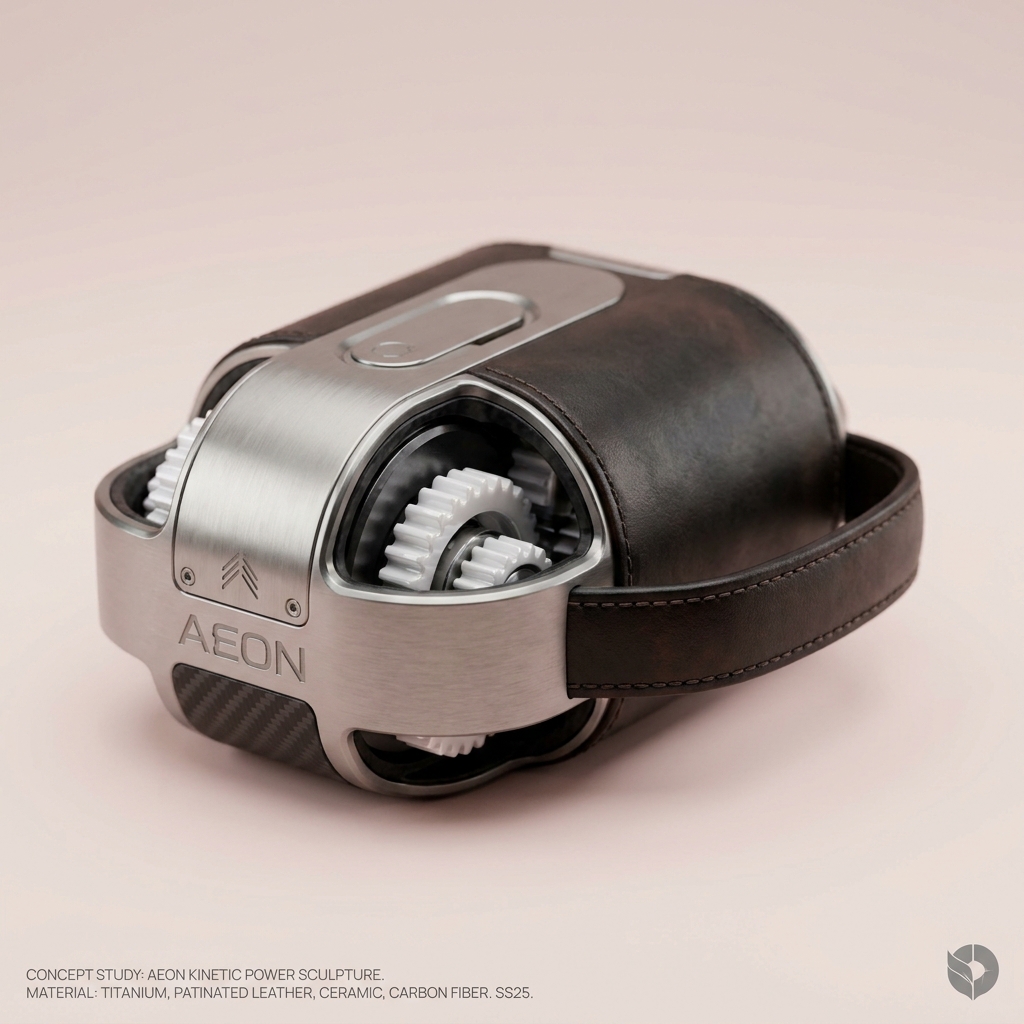
Run 3
Captioned “AEON KINETIC POWER SCULPTURE”
Metal, leather, gear detail and corner typography continue
AEON appears on the body with another invented mark; practical function remains unclear
Run 1: the coffee-machine form is recognizable, but the brand mark diverges. A concept image cannot validate a working machine.Run 2: Token360 lettering appears, while the caption carries much of the functional explanation.Run 3: premium-material styling continues, but a different brand name is generated.
Which model and request settings were recorded?
The three saved request JSON files are identical. Each requested one square image through Token360’s Nano Banana Pro model entry, without a reference image or a seed. Returned model identifiers differed, so this is repeated use of one public API model entry, not proof that every underlying version or route was identical.
Endpoint
POST https://api.token360.ai/v1/images/generations
Requested model
nano-banana-pro
Count
n: 1, submitted three times
Size and ratio
size: "1024x1024"; aspect_ratio: "1:1"
Seed / reference image
Neither supplied
Returned model, runs 1 and 2
gemini-3-pro-image
Returned model, run 3
google/nano-banana-pro/text-to-image-developer
Actual files
Runs 1 and 2 are PNG; run 3 is JPEG. All are 1024 × 1024.
Phase One, a 100mm macro lens, shallow depth of field and softbox lighting are style instructions in the prompt. They are not camera-capture records or additional API controls. The common non-prompt request fields were:
The prompt below supplies the remaining prompt value. Original request files remain in the local editorial archive; the displayed settings do not certify every field for every future route.
What was the exact tested brand-concept prompt?
The following English text is the actual submitted version. It uses the user-supplied template, substitutes Token360 for the brand placeholder, and formats the list as plain text. No business description, official logo or brand-material system was added. That limits what this name-only test can establish.
Changing the first line would create a new brand test. No other brands were tested here, and these three outputs do not establish cross-brand reliability. Copy the tested text:
Token360:
A high-end, glossy concept art magazine editorial photograph of a unique, unexpected functional object conceptualized and designed by the brand.
1. The Concept & Object (AI Invention):
Based on the design philosophy, heritage, and material vocabulary of the specified brand, the AI must invent a novel utility product (NOT standard clothing, shoes, or bags). Examples could be home goods, tech accessories, tools, or sporting equipment, reinterpretated through the brand's lens. The object should feel sculptural yet functional.
2. Materials & Details (Hyper-Premium):
The object is constructed from ultra-premium, highly tactile materials characteristic of the brand (e.g., patinated exotic leathers, brushed aerospace-grade titanium, sculpted matte ceramics, molded carbon fiber, or technical high-fashion textiles). Every detail is hyper-realistic: visible stitching, microscopic material grain, precision engravings, and complex texture contrasts.
3. Photography & Lighting (Cinematic Studio):
Shot on a medium format Phase One camera with a 100mm macro lens. Extremely shallow depth of field, with sharp focus on the hero details of the object and a creamy, smooth bokeh background. The lighting is sophisticated studio softbox lighting: gentle, enveloping fill light with precise rim lighting to accentuate contours and material textures.
4. Environment:
A seamless, impeccably clean studio cyclorama background in a pure, ultra-light pastel tone (e.g., desaturated mint, pale blush, or off-white), free of shadows.
5. Layout & UI Elements (Strict Placement):
- Bottom Right Corner: A small, understated, monochrome gray logo of the brand.
- Bottom Left Corner: Small, minimalist monochrome gray text describing the invented product. The font style looks like Manrope Regular with very tight tracking (kerning) and balanced line spacing. Example format: "CONCEPT STUDY: [AI inserts invented product name]. MATERIAL: [AI inserts main materials]. SS25."
Which input details may have shaped the brand interpretation?
The prompt specifies photography, materials and layout in detail while identifying the brand only by name. Token360’s supplied brand facts describe enterprise access to text, image, audio and video models. They do not supply an industrial-product heritage or a leather-and-metal design system for this experiment.
Leather and metal recur in all three images and are also examples explicitly suggested by the template. That is a reason to investigate the influence of its luxury-material cues, not proof of their causal effect. Product names, fingerprint icons and exposed gears similarly suggest imagined functions without demonstrating manufacture or operation.
The limited brand description and absence of an official logo reference are observable input conditions. Adding brand material might help, but that is a hypothesis for another test.
Editorial assessment: visual consistency, brand accuracy and functional credibility are separate checks. Photographic realism does not establish the other two.
What should the next experiment change?
A follow-up could retain the photography and layout instructions while adding one confirmed brand description. Test whether that changes relevance before calling it a fix. For exact logos and copy, supply approved assets or add them after selecting an image; a fictional generated mark should not become an official brand asset.
Add confirmed business context, intended users and design constraints. Do not invent brand history or a material tradition.
Specify one problem the invented product should solve, with a purpose readers can infer from its form.
When evaluating brand interpretation, consider a no-logo condition so typography is not mistaken for design relevance.
Change one condition at a time and retain requests and outputs. None of these follow-up changes was tested in this article.
How should this entry be used in Prompt Library?
Use it for cross-category product-concept exploration, with the visual consistency and brand deviations shown together. Three images are insufficient to claim that replacing a name produces an accurate brand interpretation, an official campaign asset or a stable success rate.
The template can help explore forms, material combinations and creative directions. Reproducing an existing product, maintaining official visual identity or proposing a manufacturable mechanism requires more specific inputs and separate acceptance evidence.
Where did the prompt come from, and what remains unverified?
The supplied provenance points to Amir Mushich’s X post and the public prompt archive, under “Unexpected High-End Product Concepts.” Those pages were not independently re-read for this edition. Engagement figures, original posting dates and republication permission are not presented as verified facts.
The text was supplied for this test; its inclusion and attribution are not a claim that the source grants a public reuse license. Source rights and permission should be checked before further redistribution. The adaptation is not represented as wholly original Token360 material or as endorsed by the source creator.
The three pictured outputs came from the supplied Token360 API test. A separate image made earlier with an embedded image tool is excluded. There was no functional or manufacturing validation, other-brand test or controlled multi-model comparison.
Frequently asked questions
Can these images be used as Token360 product advertisements?
They do not establish that Token360 sells the depicted hardware. These are imagined concepts with brand marks that need checking. Confirm business claims, brand assets and applicable prompt rights before using them in an official campaign.
Does similar styling across three images prove reliability?
No. Pale backgrounds, metal and leather recur in these samples, while brand marks diverge. A small uncontrolled collection cannot establish a model-wide success rate or guarantee the next output.
Would a brand brief or logo reference improve the result?
That remains untested here. Keep other settings fixed, add one approved input, and compare the same acceptance criteria. A proposed improvement should not be reported as a verified repair.


 Guides
 Guides
 Guides